Category: Uncategorized

  • Katherine de Valois: A New Book Contract and a Queen Worth Rediscovering

    Katherine de Valois: A New Book Contract and a Queen Worth Rediscovering

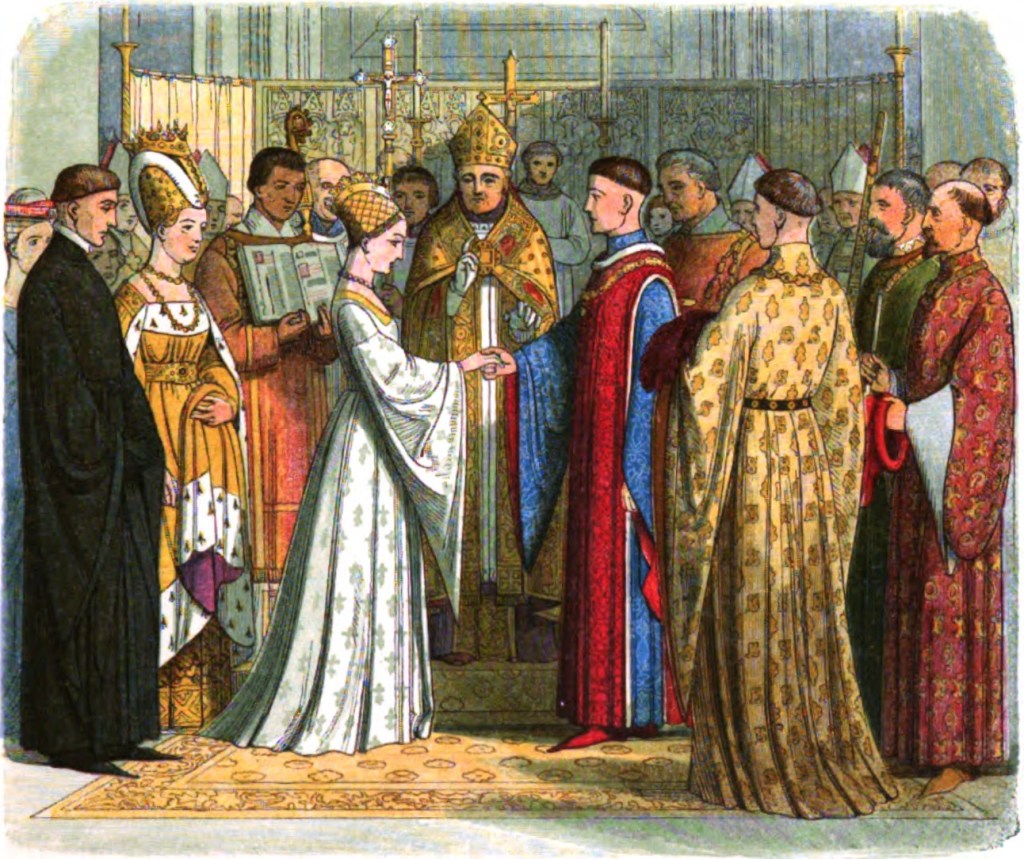
    Above: Henry V and Katherine of France, imagined by James William Edmund Doyle in 1864, engraved by Edmund Evans. A nineteenth-century interpretation of their wedding, not a contemporary likeness. Public-domain image and source.

    I have some book news to share: I have signed a contract with Pen & Sword History for a biography of Katherine de Valois. The working title is The Rise of the Tudors, Queen Catherine de Valois: Princess of France, Queen of England, Mother of a Dynasty.

    It is a subject I am looking forward to getting my teeth into. Katherine stands at the meeting point of some of the most dramatic stories in medieval history: the struggle for France, Henry V’s kingship, the troubled inheritance of Henry VI and the beginnings of the Tudor family. Yet it is surprisingly easy to travel through those stories without spending much time with Katherine herself.

    That is what draws me to this book. I want to give her the space that a life of her own deserves.

    A princess between two kingdoms

    Born in 1401, Katherine was a daughter of Charles VI of France and Isabeau of Bavaria. Her childhood belonged to a royal world shaken by political rivalry, her father’s recurring illness and conflict. Understanding that French world matters. So does looking carefully at Isabeau, whose reputation has so often been shaped by hostile accounts.

    Katherine married Henry V at Troyes on 2 June 1420. Their marriage formed part of a settlement intended to reshape the succession to the French crown. The hopes invested in it reached far beyond the wedding ceremony: this young French princess was becoming queen of England while the futures of both kingdoms were being contested.

    The political purpose of the marriage is clear. The private relationship is harder to recover. I want to approach it without assuming that an arranged royal marriage must have been loveless, or borrowing certainty from later romantic retellings. The surviving evidence deserves a close and fair reading.

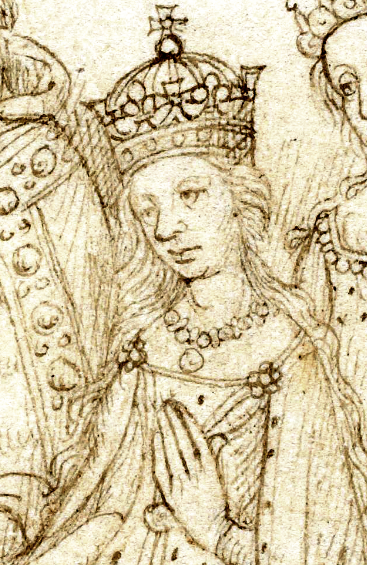
    Katherine de Valois wearing a crown, shown in a late fifteenth-century manuscript illustration.
    Katherine in the Beauchamp Pageants, attributed to the Caxton Master, late fifteenth century. British Library, Cotton MS Julius E IV/3. This depiction was made after her lifetime. Public domain; image source.

    A young widow and the mother of a king

    Her son, the future Henry VI, was born in December 1421. Henry V died the following August. Katherine was still only twenty, and her baby was king of England.

    Those dates can pass very quickly in a general history. In a biography, there is room to pause over what they meant. How did a young queen’s position change when she became a widow? What choices were available to her? How did motherhood, royal status and the interests of those governing for an infant king fit together?

    These are questions about power, but they are also questions about a human life. They are part of why medieval biography matters to me. A succession chart can show who inherited. It takes a fuller account to explore the circumstances in which people had to live.

    Why the Tudor story begins before Bosworth

    Katherine’s later relationship with the Welshman Owen Tudor brought another extraordinary family connection. Their sons included Edmund and Jasper Tudor, half-brothers of Henry VI. Edmund became the father of Henry VII. Katherine was therefore both the mother of a Lancastrian king and the grandmother of the first Tudor king.

    She died in 1437, long before her grandson took the throne. The Tudor future was something she never lived to see. Reading that outcome backwards into her decisions risks making her life look more predictable than it was.

    The story of Katherine and Owen has attracted romance and legend for centuries. It deserves careful attention, with the uncertainties about their courtship and marriage made clear. There is plenty of interest in the evidence itself without filling its gaps with invented conversations or motives.

    Why Katherine deserves this book

    For me, the appeal lies in bringing these parts of her life together: French princess, English queen, young widow, mother and a woman making her way within the constraints of royal society. Each role helps us understand the others.

    Even the story of her remains raises uncomfortable questions about remembrance. Westminster Abbey records the repeated movement of her coffin and the long period during which her body lay above ground. Her treatment after death belongs to the story of how later generations saw her, too.

    There is much to explore, and signing the contract is an exciting step. I will share discoveries, places and questions from the research here as the book develops. A publication date will follow when it is confirmed.

    If you enjoy medieval lives, royal history and the people behind the dynasties, I hope you will follow along. Katherine is going to keep me busy, and I look forward to introducing you to her world.


    Further reading: Westminster Abbey: Henry V and Catherine de Valois; Westminster Abbey: Henry VI. Both illustrations used here are public domain; their source and rights records are linked in the captions.

  • Fotheringhay and the lives behind its royal history

    Fotheringay Church

    Words and photographs by Barry Aveyard | 6 October 2026

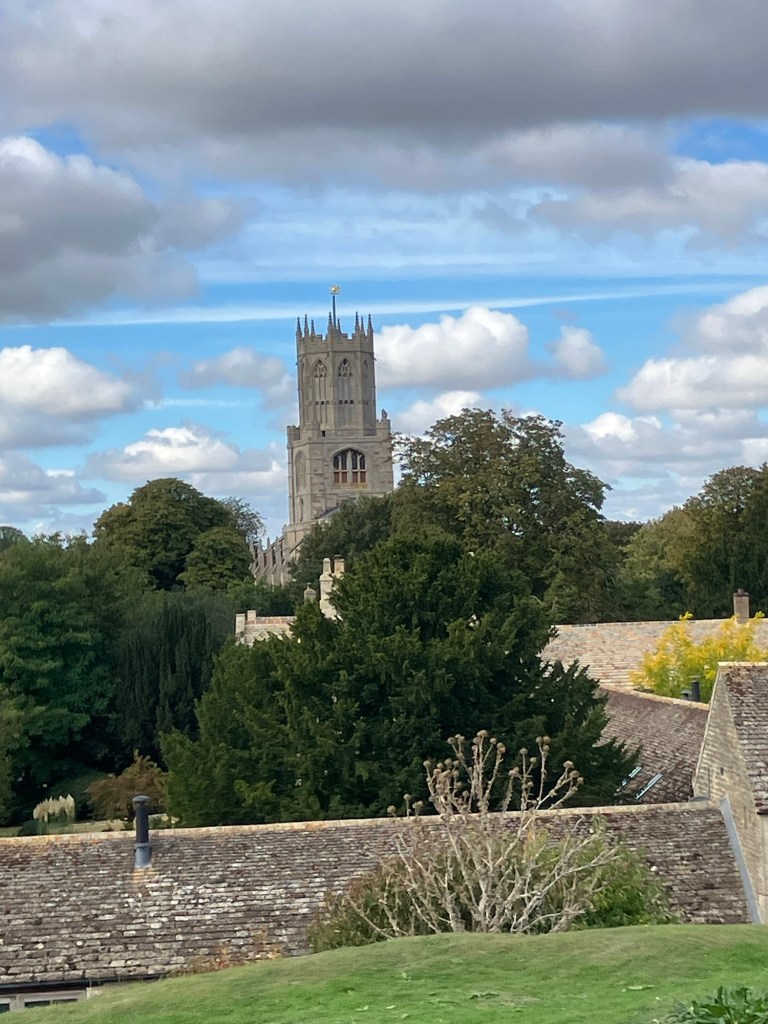
    This afternoon I visited Fotheringhay, where the church tower rises above the trees and stone houses, and the River Nene runs beside the remains of a castle. It is a small Northamptonshire village with an extraordinary place in our history. Richard III was born here. Mary, Queen of Scots, was executed here. Between those two events lies a much larger story of family, faith and royal power.

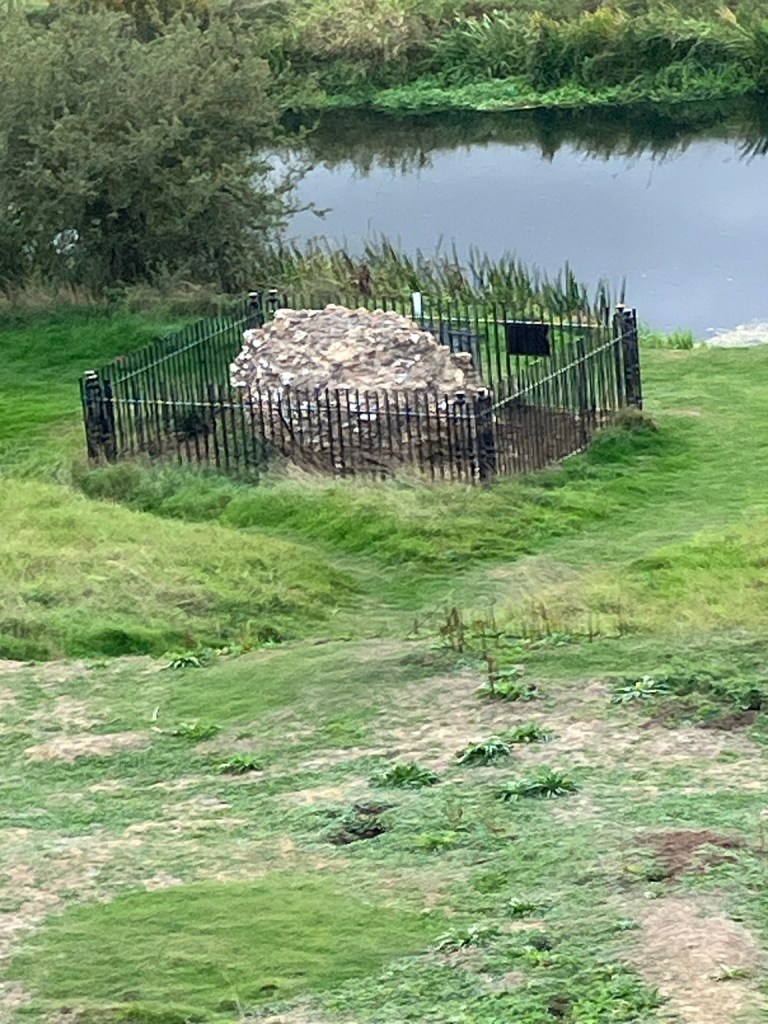
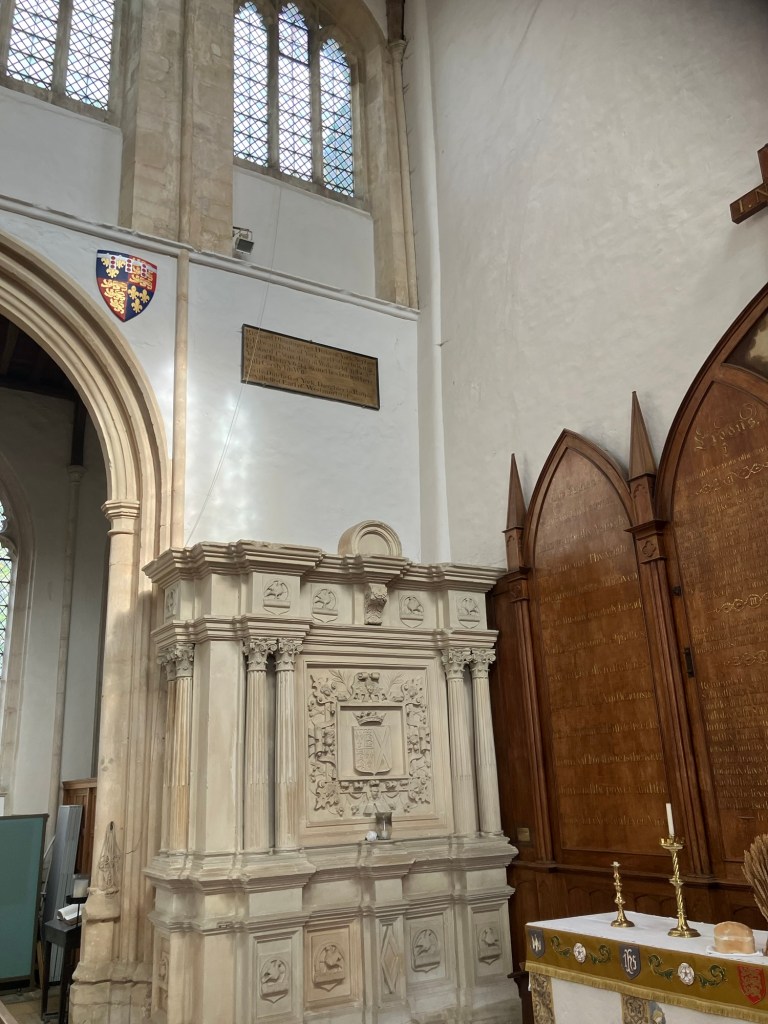
    The photographs I took capture something of that mixture. There is the colour of the pulpit and the formality of a Yorkist memorial inside the church. Outside are grass, uneven ground, water and a surviving fragment of castle wall. The buildings have changed or disappeared, but the relationships between the church, village and castle can still be read in the landscape.

    For anyone interested in the Wars of the Roses, Fotheringhay deserves time. For me, writing about Joan Beaufort and Eleanor Neville, it also has a particular family connection. Cecily Neville, Duchess of York, was Joan’s daughter and Eleanor’s sister. Her story belongs here as surely as those of the kings and queen who usually lead us to the village.


    A castle and a royal household


    Fotheringhay’s importance began long before Richard III. A Norman motte-and-bailey castle developed here beside the Nene, and in the later Middle Ages it served as both a royal residence and a place of imprisonment. Edmund of Langley, Edward III’s son and the first Duke of York, enlarged and rebuilt it in the late fourteenth century.

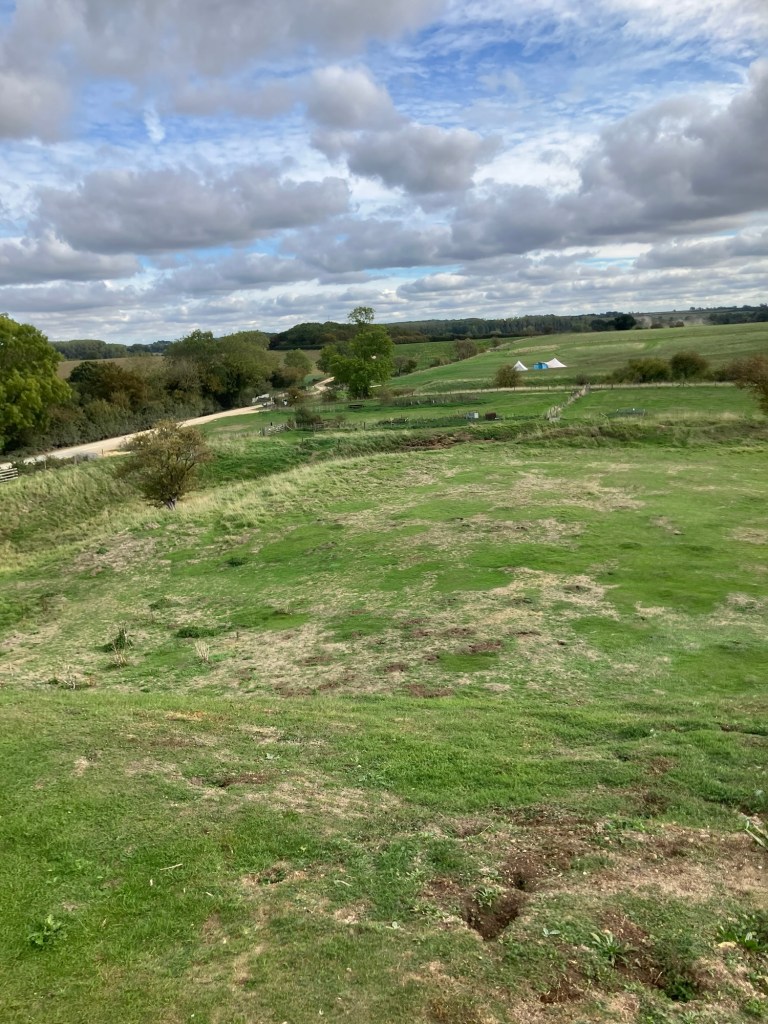
    The earthworks give only the outline of what once existed. Medieval records describe a stone tower, chapels, a great hall, chambers, kitchens and gatehouses. This was a substantial household as well as a defended stronghold. The people living around it supplied the food, labour and services that made aristocratic life possible.

    The future Richard III was born at Fotheringhay in 1452, the son of Richard, Duke of York, and Cecily Neville. At that point his kingship was far from inevitable. Thinking of the castle as a family residence helps recover something easily lost when we approach his life knowing how it ended.

    Edward IV’s provision of the New Inn, built by 1476 to accommodate visitors, is another reminder of the demands a great household placed upon a small village. Fotheringhay’s significance extended beyond the castle gates. Guests, servants, clergy and tradespeople all belonged to its story.


    Only above ground stonework that remains
    The New Inn

    The church built to remember

    The Church of St Mary the Virgin and All Saints is the most striking survivor. Its scale reflects Fotheringhay’s importance to the dukes of York. They developed a collegiate foundation here, with priests and choristers whose duties included prayer for the family’s souls. Worship, music and remembrance were woven into the life of the place.

    Edward, the second Duke of York, killed at Agincourt in 1415, was buried here. In 1476, Edward IV arranged the magnificent reburial of his father, Richard, Duke of York, and his brother Edmund, Earl of Rutland. Both had died in the catastrophe at Wakefield in December 1460. Richard, then Duke of Gloucester and later Richard III, led the funeral procession to Fotheringhay.

    That ceremony expressed family grief, but it also asserted the dignity of a dynasty now occupying the throne. The father who had failed to become king was honoured by the sons whose fortunes his ambitions had helped shape.

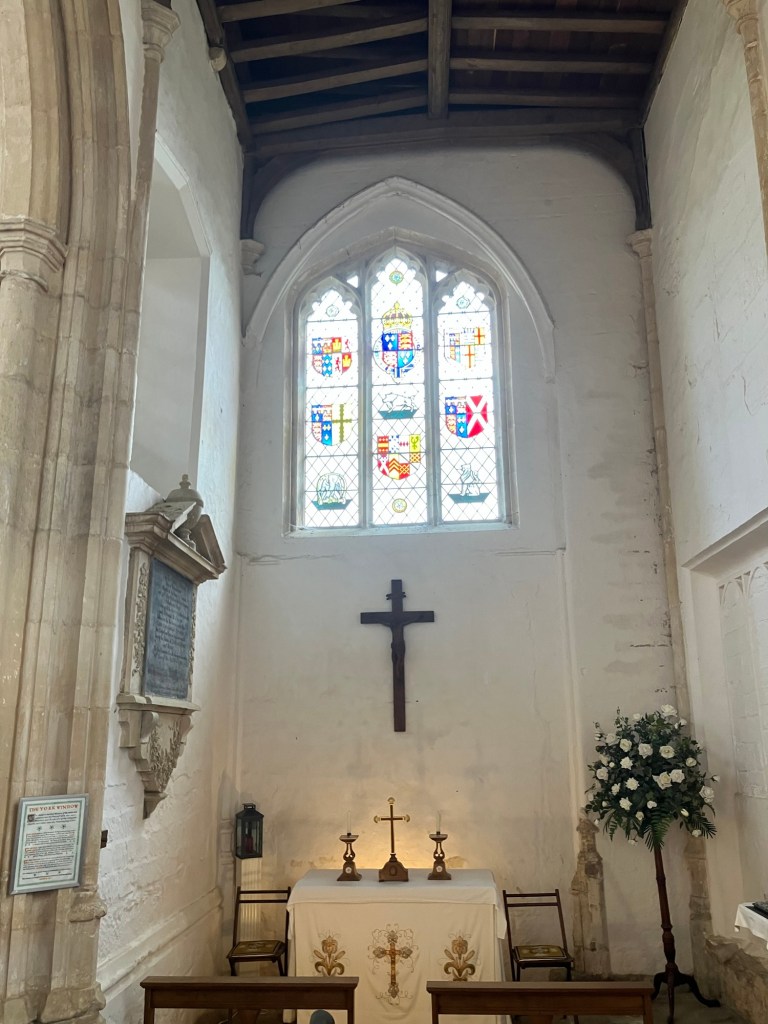
    The painted fifteenth-century pulpit, given by Edward IV, makes that family presence especially vivid. Its heraldic decoration brings royal identity into the church itself. The colours we see have been restored; nevertheless, this surviving object offers a much fuller impression of medieval display than bare stone alone.

    Site of Great Hall


    Cecily Neville and the family behind the monuments

    Cecily brings Fotheringhay particularly close to my own writing. She and Eleanor Neville were sisters, daughters of Ralph Neville, Earl of Westmorland, and Joan Beaufort. Their marriages placed them in families that would become deeply involved on opposing sides of the Wars of the Roses.

    At Northampton, Eleanor lost her son Thomas Percy, Lord Egremont. Later that same year, Cecily lost her husband Richard and their son Edmund at Wakefield. These were separate battles and separate political causes, but for the two sisters they brought losses within the same extended family. Following their lives makes the familiar division into Lancaster and York feel much less tidy.

    Cecily lived until 1495 and was buried at Fotheringhay beside her husband. Her long widowhood encompassed the reigns and deaths of both her royal sons. It is difficult to stand before the memorials without thinking about the people whose lives lie behind the titles.

    The monuments also record later change. Following the suppression of the college, the eastern part of the church was lost. Elizabeth I provided for the commemoration of her Yorkist ancestors in the surviving church. The memorial photographed here belongs to that Elizabethan history of remembrance; it is not an untouched medieval tomb.

    My forthcoming Pen & Sword biographies of Joan Beaufort and Eleanor Neville follow these family connections. Fotheringhay gives them a physical setting, bringing familiar names into the same landscape.

    Tomb of Richard and Cecily


    Mary Queen of Scots and the castle that disappeared


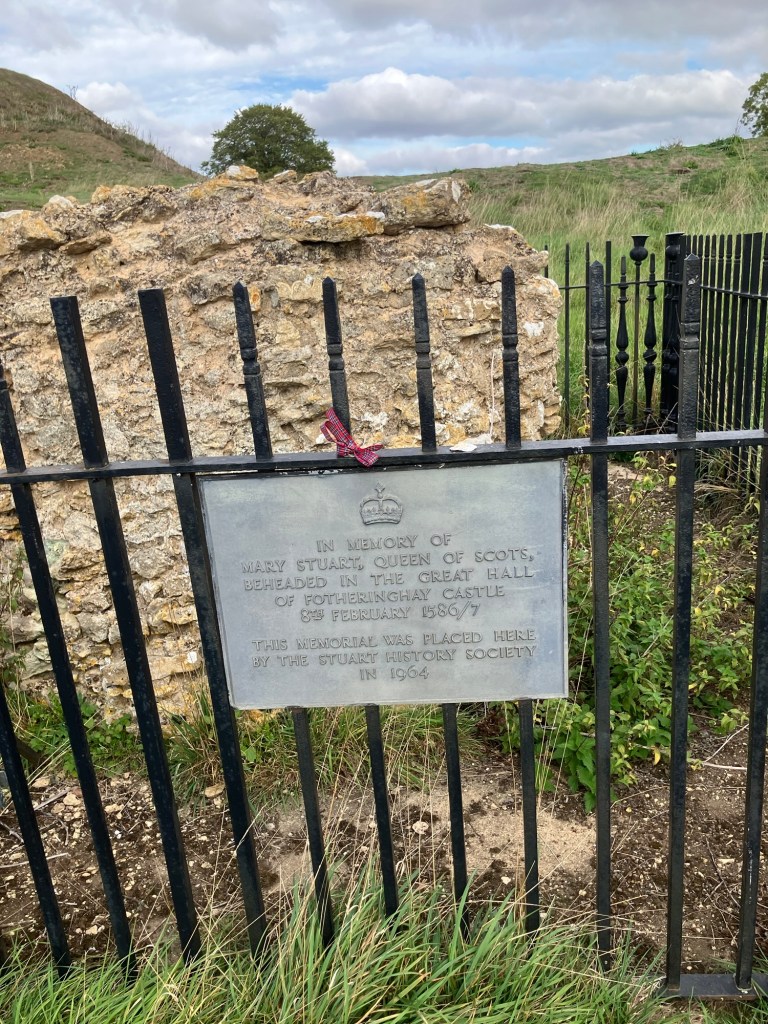
    More than a century after Richard’s birth, Fotheringhay became the setting for another royal life’s final chapter. Mary, Queen of Scots, was brought here in 1586 and tried over her alleged involvement in the Babington conspiracy against Elizabeth I. On 8 February 1587, she was beheaded in the castle’s great hall.

    This was an event with consequences far beyond Northamptonshire. Mary was an anointed queen, a Catholic claimant to the English throne and the mother of Scotland’s king. Her captivity had made her a focus for plots and for the fears of Elizabeth’s government. Her execution exposed the dangerous question of whether one monarch could lawfully put another to death.

    The National Library of Scotland preserves Mary’s last letter, written in the early hours of the morning of her execution. It is a powerful surviving connection with the woman herself. Her body was initially buried at Peterborough Cathedral; in 1612 her son, James VI and I, had her reburied in Westminster Abbey.

    Today the great hall is gone. The surviving masonry and the earthworks mark a much larger vanished complex. It is tempting to explain the castle’s destruction as an act of vengeance by Mary’s son, but that familiar story should not be presented as established fact. The documented history is one of seventeenth-century decline and dismantling.


    Why Fotheringhay still matters

    Fotheringhay remains a living village, and its church continues as a place of worship. Its survival depends on care as well as historical interest. The parish records extensive repairs in 2017–18, including work on the roof, tower, windows and masonry, alongside facilities intended to support its modern use.

    The castle site matters in a different way. Its protected earthworks preserve evidence that standing walls alone could never tell us. Keeping the ground and its setting intact allows future research to ask new questions about the buildings and the people who used them.

    For visitors, the church and castle belong together. One preserves the splendour and deliberate remembrance of the Yorkist family; the other asks us to look carefully at what has survived beneath the grass. Both reward the effort.

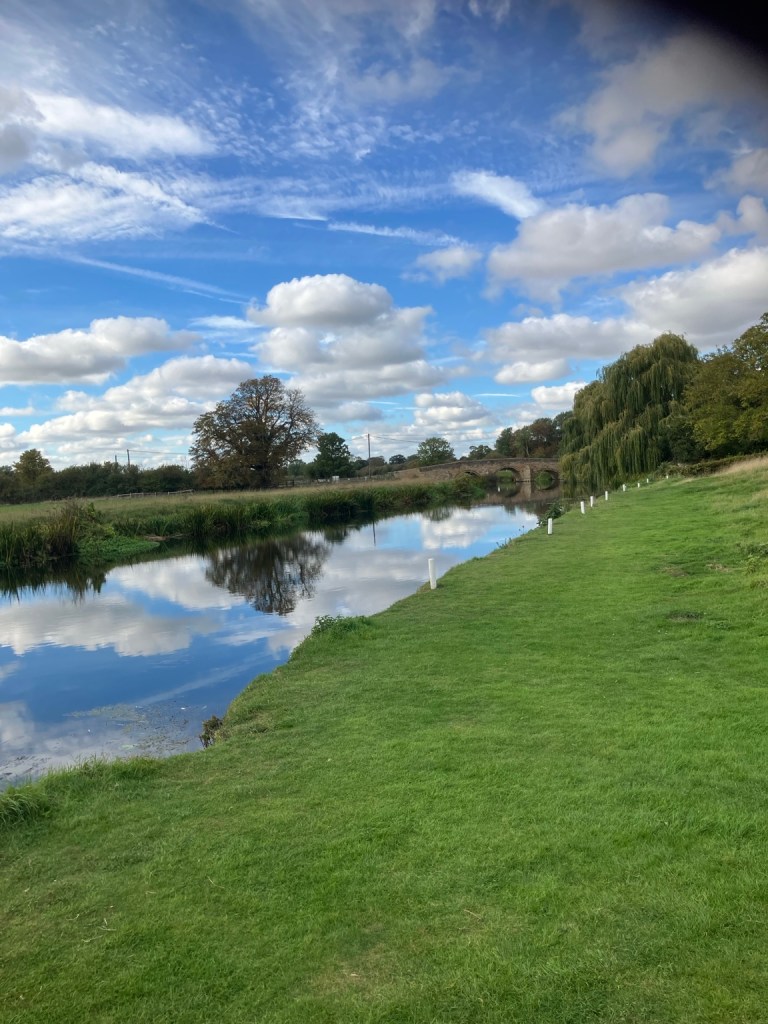
    My photographs end with the river. It is part of the setting that connected the castle to the wider world, and part of what makes Fotheringhay such a rewarding place to spend an afternoon. I came away thinking especially of Cecily: a woman so often introduced as the mother of two kings, whose own family history gives this village another reason to be remembered.

    King Richard III Chapel
    River Nene

    Further reading

    Historic England — Fotheringhay castle and its protected remains

    Richard III Society — Fotheringhay, its church and royal connections

    Wakefield Historical Society — the reburial at Fotheringhay

    Warmington Benefice — the church and its continuing life

    National Library of Scotland — Mary’s last letter

    Westminster Abbey — Mary, Queen of Scots

  • The Battle of Northampton: Eleanor Neville and the Terrible Cost of the Wars of the Roses

    The Battle of Northampton, fought on 10 July 1460, is sometimes overshadowed by Towton and Bosworth. Yet its consequences were extraordinary. Henry VI was captured, several leading Lancastrian noblemen were killed, and a struggle over the government of England moved closer to an open contest for the crown.

    For me, there was another reason for visiting. I have recently completed my biography of Eleanor Neville, Countess of Northumberland, for Pen & Sword. Following her life has taken me to places where her family’s fortunes changed, often terribly. At Northampton, her son Thomas Percy, Lord Egremont, was killed.

    Walking around Delapré Abbey and the surrounding landscape brought that loss into focus. Before turning to Eleanor, though, it is worth asking why these armies were here at all.

    Why Northampton?

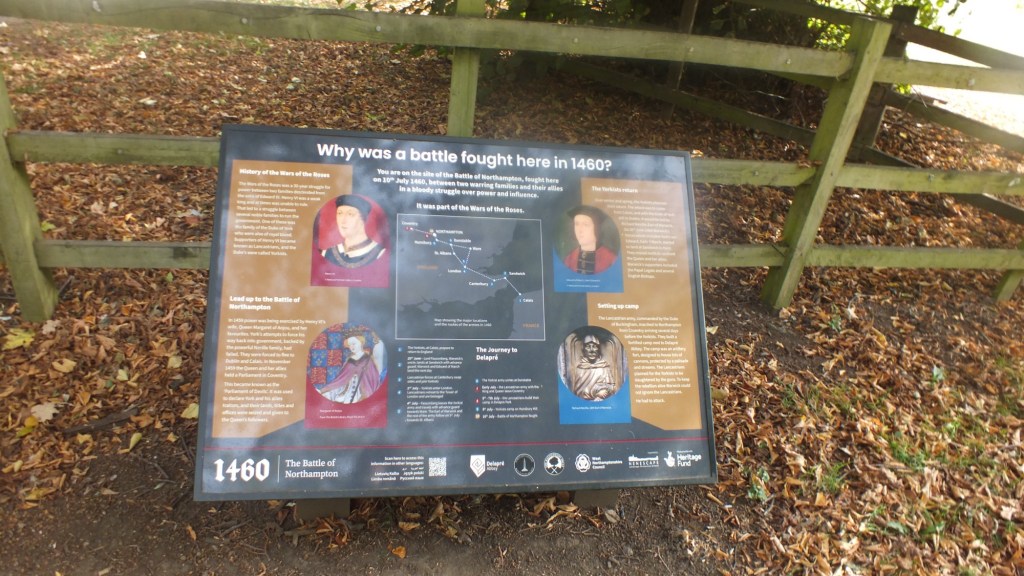
    The fighting grew out of a prolonged struggle over Henry VI’s government. Richard, Duke of York, and his allies challenged the men around the king; in 1460 they still claimed to be acting in Henry’s interests. The contest had already drawn in bitter rivalries between noble families, including the Percys and Nevilles.

    After their collapse at Ludford Bridge in October 1459, the Yorkist leaders fled abroad. York went to Ireland; Richard Neville, Earl of Warwick, his father the Earl of Salisbury, and York’s son Edward, Earl of March, took refuge at Calais. Their defeat had seemed decisive. In June 1460, however, the Calais leaders returned to Kent and advanced to London.

    Warwick and Edward then marched north towards Henry’s army. The king’s supporters occupied a defended camp near Delapré, south of Northampton and close to the River Nene. Northampton was therefore a confrontation between the royal army and opponents whose return had rapidly overturned the apparent Lancastrian victory of the previous year.

    Interpretation board explaining why the Battle of Northampton was fought in 1460

    Delapré Abbey: a nunnery beside a battlefield

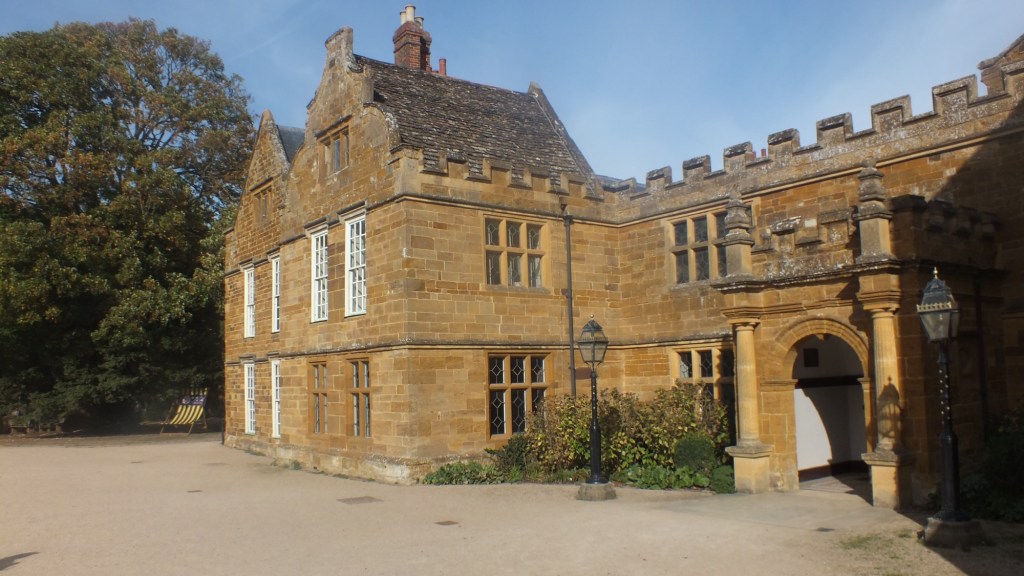
    Delapré Abbey during my visit

    Delapré had been a place of women’s religious life for more than three centuries. Founded in 1145 by Simon de Senlis II, Earl of Northampton, the Abbey of St Mary de la Pré housed Cluniac nuns. Its name, “of the meadow”, belongs to the landscape in which the community lived and worshipped.

    The building we see today should not be mistaken for the abbey as it stood in 1460. The nunnery was dissolved in 1538, and later owners transformed the site into a country house. Nevertheless, the setting gives a sense of how close the battle came to this religious community.

    I found myself thinking about the women inside the abbey as the armies gathered. What could they hear? How much did they know about the danger outside? We cannot recover their individual reactions, but remembering their presence changes the scene. This was their home as well as the ground on which powerful men chose to fight.

    10 July 1460: the king taken prisoner

    The Lancastrian camp was protected by earthworks and a ditch. Its defenders also had artillery, although rain is traditionally blamed for making the guns ineffective. Against them came forces led by Warwick, Edward of March and William Neville, Lord Fauconberg. Negotiations failed, and the Yorkists attacked.

    The decisive breach appears to have come through Edmund Grey, Lord Grey of Ruthin, whose troops helped the attackers into the camp. Once those defences were penetrated, the Lancastrian position collapsed. Men fleeing the fighting drowned in the Nene. Accounts differ over the numbers killed and the precise course of the action, so a neat description of every movement would give a misleading impression of certainty.

    Among the dead were Humphrey Stafford, Duke of Buckingham; John Talbot, Earl of Shrewsbury; John Beaumont, Viscount Beaumont; and Thomas Percy, Lord Egremont. Henry VI survived, but became a prisoner. He was brought to Delapré, where he heard Mass before being taken to London.

    Capturing Henry gave the Yorkists control of the king, but did not settle the succession. York returned and claimed the crown. The autumn’s compromise allowed Henry to remain king while making York his heir, disinheriting Henry’s son. This ensured that the struggle would continue.

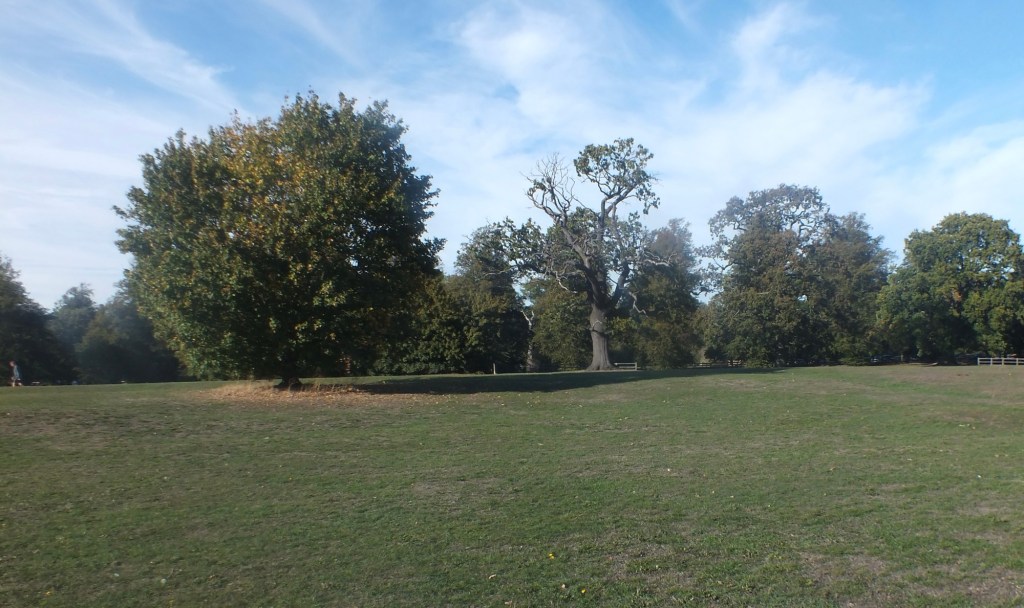
    The Northampton battlefield landscape today

    Thomas Percy, Eleanor’s son

    Titles can make the people in this history curiously remote. We read that Egremont was killed, register another Lancastrian loss, and move on. Researching Eleanor has made it impossible for me to read that name quite so casually. Thomas was her son, and Northampton brought another bereavement into a family already damaged by the conflict.

    He was also an active participant in the feuds of his generation. Recognising Eleanor’s loss does not require us to turn Thomas into an innocent bystander. The political and the personal belong together: a man could help perpetuate a violent rivalry and still leave a mother to grieve for him.

    No surviving letter tells us how Eleanor received the news. I cannot supply words or feelings that she left unrecorded. But that silence is one of the difficulties of writing about medieval women. The public event is recorded; the private consequences often have to be approached much more cautiously.

    A husband and four sons

    Eleanor’s losses extended across almost a decade. Her husband, Henry Percy, 2nd Earl of Northumberland, was killed at the First Battle of St Albans on 22 May 1455. Thomas died at Northampton on 10 July 1460. On 29 March 1461, her son Henry, 3rd Earl of Northumberland, was killed at Towton.

    I recently visited Towton and walked towards Bloody Meadow. Looking across ground associated with the defeated army’s flight made the familiar accounts of that battle harder to read with detachment. For Eleanor, its outcome included the death of another son.

    William Percy, Bishop of Carlisle, died in 1462. His death belongs in this account of Eleanor’s bereavements, although he was not killed in battle. Then, on 25 April 1464, Ralph Percy was killed fighting for the Lancastrian cause at Hedgeley Moor.

    A husband and four sons: Thomas, Henry, William and Ralph. Four of these five deaths were battlefield losses; William’s was a further family bereavement during the same troubled years. Eleanor survived them all. That is a substantial part of the human cost behind the campaigns and changes of king.

    A family divided

    Eleanor’s position was particularly painful to contemplate because the conflict cut across her own family. She was a daughter of Ralph Neville, Earl of Westmorland, and Joan Beaufort. Richard Neville, Earl of Salisbury, was her brother; Warwick was her nephew. Her sister Cecily was the wife of Richard, Duke of York, and mother of Edward of March, the future Edward IV.

    Her marriage had made her Countess of Northumberland and placed her within the Percy family. At Northampton, the army in which her son died faced forces led by her own relatives. The labels “Lancastrian” and “Yorkist” are useful, but they can conceal just how closely connected these people were.

    For women in such families, the consequences reached beyond the first news of a death. Bereavement could be followed by confiscation, uncertainty over inheritance and the need to protect children and grandchildren. Eleanor’s later life has to be understood within that wider disruption.

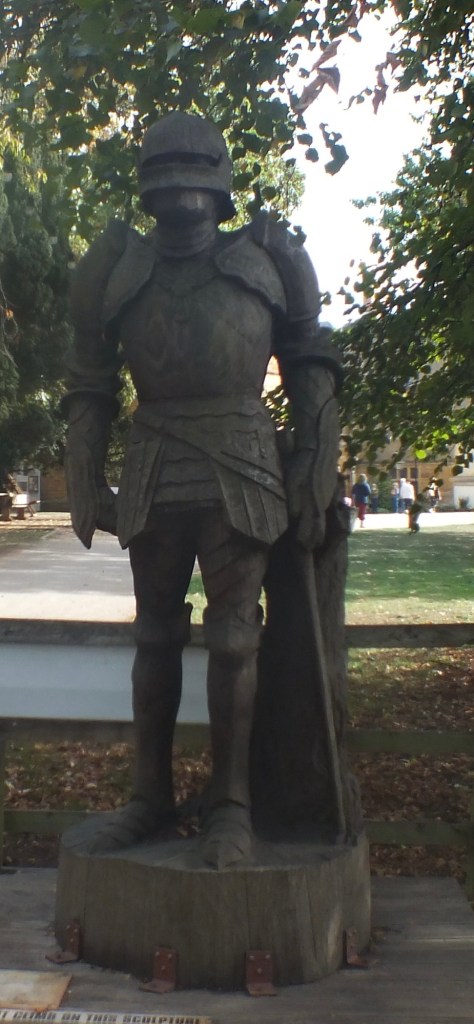
    Armoured figure displayed in the grounds at Delapré

    Finding Eleanor at Northampton

    Visiting a battlefield cannot fill every gap in the records. The landscape has changed, and even the surviving accounts leave questions unresolved. I do not know where Eleanor was when she heard about Thomas, or who brought her the news. Standing at Delapré made me think about those questions again, without pretending that the place could answer them.

    It also reminded me why I wanted to write her biography. Eleanor so often appears beside someone more famous: Joan Beaufort’s daughter, Cecily Neville’s sister, Northumberland’s wife. Following her own life brings those relationships together and reveals what the upheavals of the fifteenth century meant for one woman who endured them.

    Northampton changed the balance of power in England. For Eleanor it also meant the loss of Thomas. Keeping those two things in view is central to the book I have been writing.

    My forthcoming biography of Eleanor Neville, Countess of Northumberland, will be published by Pen & Sword. You can read more about how I came to her story in Why Katherine Swynford Led Me to Eleanor Neville.

    For more on the place and the battle, see Historic England’s battlefield entry, Delapré Abbey’s history and John Rickard’s account of the campaign.

  • A New Home for a Changing Year

    In January, I began a blog about Katherine Swynford as a New Year project. I wanted somewhere to share the questions, places and documents that had held my attention for so long. I had no idea quite how much would change before the year was out.

    Katherine was the starting point, but following her family led me further. Joan Beaufort drew me into the world of the Nevilles; Eleanor Neville took me into the Wars of the Roses. My research into Piers Gaveston has opened another, earlier chapter of medieval history. This year I have signed contracts for three books with Pen & Sword. It still feels rather extraordinary to write that sentence.

    The talks have grown too. I have enjoyed speaking to people online and in person, and the interest and questions from audiences have made the research feel like a conversation. There is a special pleasure in seeing someone become as curious about a neglected life or a small piece of evidence as I am.

    So the old Katherine blog, valuable as it remains, no longer quite described the range of what I am doing. I needed a new home where Katherine could still have her place, alongside Joan, Eleanor, Piers and the other people and places I encounter. That is why I have created The Medieval History Bloke.

    The research and the arguments are my own. Here I will share what I find, what I am still trying to work out, and some of the journeys behind the books and talks. I hope you will come along.

    If you are new here, explore the writing by subject. My earlier Katherine Swynford blog remains available too.

  • After John of Gaunt: Katherine Swynford’s Last Four Years

    The Priory Katherine’s home for the last years of her life 

    John of Gaunt died on 3 February 1399. Katherine Swynford did not.

    For more than twenty years their lives had been intertwined. Their relationship had survived scandal, separation and political upheaval, produced four children and, eventually, ended in marriage. When Katherine married John at Lincoln in January 1396, the former wife of a Lincolnshire knight became Duchess of Lancaster.

    Three years later she was a widow again.

    It is at this point that Katherine often seems to disappear from her own story. Accounts of her life naturally concentrate upon her relationship with John of Gaunt and then move rapidly from his death to Katherine’s own death in May 1403. Yet those four years deserve rather more attention. They took place during one of the most dangerous political periods of her lifetime and may allow us to see something of Katherine acting independently of the man who had dominated so much of her adult life.

    Her return to Lincoln, in particular, deserves another look. It may have represented familiarity and homecoming, but in the unsettled months following Gaunt’s death it may also have offered Katherine something more immediate: distance, security and protection.

    A widow in a dangerous position

    Katherine had experienced widowhood before. Hugh Swynford died in 1371, leaving her with young children and responsibilities connected with the Swynford estates. Her position in 1399 was entirely different. She was now the widow of a royal duke, Duchess of Lancaster, mother of the legitimised Beaufort children and stepmother to Henry Bolingbroke.

    Those titles brought prestige, but in early 1399 they did not necessarily bring security.

    John of Gaunt’s death came at a particularly dangerous moment for his family. His son Henry Bolingbroke had been exiled by Richard II the previous year. Following Gaunt’s death, Richard extended Henry’s exile and took control of the vast Lancastrian inheritance rather than allowing the absent heir to succeed normally.

    Katherine could hardly have failed to recognise the implications.

    Her own interests were affected when officials dealing with the Lancastrian estates also interfered with property to which she was entitled. Katherine had to seek the restoration of her rights. Richard did restore them, an important fact which prevents us from presenting the king as engaged in some personal persecution of Katherine. Nevertheless, the experience demonstrated how vulnerable even the Duchess of Lancaster could become once her powerful husband was dead.

    She occupied an uncomfortable position. She was the widow of John of Gaunt, stepmother of the exiled Bolingbroke and mother of his Beaufort half-siblings. Her daughter Joan was married to Ralph Neville, another man with strong Lancastrian connections. Katherine herself may not have been politically active, but it would have been impossible to separate her completely from the family whose power Richard was now attempting to control.

    Against that background, Lincoln begins to look like a very sensible place to be.

    Why Lincoln?

    Lincoln already had deep connections with Katherine’s life. Nearby Kettlethorpe had been her home during her marriage to Hugh Swynford, and Lincoln Cathedral belonged to the landscape she had known for decades. Most significantly, it was at Lincoln that Katherine and John of Gaunt had finally married in January 1396.

    There were therefore powerful personal reasons for her return.

    There may also have been practical ones.

    We cannot prove that Katherine went to Lincoln specifically because she feared Richard II, and it would be wrong to present speculation as fact. Yet it is reasonable to wonder whether safety and political caution formed part of her thinking. The royal court was hardly an attractive place for Gaunt’s widow during the spring and summer of 1399. Her stepson had been excluded from his inheritance, Lancastrian property was in royal hands and Katherine had already experienced interference with her own rights.

    Lincoln offered distance from all this.

    It was familiar territory, close to her Swynford connections and away from the immediate pressures surrounding Richard’s court. Her son Henry Beaufort was Bishop of Lincoln, adding a significant family connection to an already important ecclesiastical centre. Katherine’s association with the cathedral close placed her within a very different environment from the increasingly dangerous political world surrounding the king.

    Her withdrawal to Lincoln can therefore be read in more than one way. It may have been the natural retirement of a widow returning to a place she knew well. It may equally have been an exercise in prudence by a woman who had spent enough of her life close to royal politics to recognise when remaining quietly out of sight was advisable.

    Perhaps it was both.

    Katherine and the revolution of 1399

    Any hope of a peaceful first year of widowhood was shattered by events.

    Henry Bolingbroke returned to England in the summer of 1399. His stated purpose was initially the recovery of his Lancastrian inheritance, but events moved rapidly. Richard II was captured, forced from the throne, and Bolingbroke became Henry IV.

    For Katherine, this extraordinary revolution was also a family crisis.

    The new king was her stepson. Her Beaufort children were his half-brothers and half-sister. Thomas Swynford, her son by Hugh, was also closely associated with the Lancastrian world. Few women could have been more intimately connected with the family now taking possession of the throne.

    Yet Katherine herself remains remarkably difficult to find in the political story.

    There is no convincing evidence that she took an active role in Henry’s return or Richard’s deposition. We do not have a letter revealing her views, nor a chronicler recording Katherine’s reaction to the fall of one king and accession of another. Her silence matters because it warns us against turning family connection into political participation.

    Indeed, her apparent absence may itself be revealing. Katherine had survived long enough at the edge of royal power to know its dangers. During the crisis she seems to have allowed the men of the Lancastrian family to fight their political battles while she remained away from the centre of events.

    That may not have been passivity. It may have been good judgement.

    The king’s stepmother

    Henry IV’s accession transformed Katherine’s position once again. The woman who had once been condemned as John of Gaunt’s mistress was now the stepmother of the King of England.

    Relations between Katherine and Henry might easily have been uncomfortable. Katherine had been his father’s lover while Gaunt was married to Constance of Castile, and her Beaufort children were Henry’s half-siblings. Later she had become Gaunt’s wife and Duchess of Lancaster.

    Yet Henry’s treatment of Katherine after becoming king suggests acceptance rather than hostility. Her financial position was protected, and she continued to enjoy royal favour and provision.

    One of the benefits associated with her later years was an annual allowance of wine from the royal supplies at Kingston upon Hull. To modern eyes such grants can seem like minor administrative details, but medieval relationships were frequently expressed through precisely this kind of patronage. Land, money, annuities, gifts and privileges tell us a great deal about status and favour.

    Henry’s treatment of Katherine acknowledged her established position within the Lancastrian family.

    It also meant that by the end of 1399 Katherine occupied a position she could scarcely have imagined as the young wife of Hugh Swynford. She was Duchess of Lancaster, stepmother of the king and mother of men and women firmly established among England’s elite.

    Katherine without John

    There is a temptation to describe these years purely as the aftermath of Katherine’s great relationship with John of Gaunt. Doing so, however, risks repeating the very problem that has so often obscured her.

    Widowhood could provide medieval aristocratic women with freedoms that marriage did not. Katherine had her own income, household and rights. She no longer existed legally or socially simply as the wife of a husband whose enormous household and political position overshadowed almost everyone around him.

    The surviving documents do not give us the intimate portrait we might wish for. Katherine did not leave a diary or collection of private letters explaining how she spent her days in Lincoln. We encounter her instead through grants, property arrangements and administrative records.

    Yet even these fragments suggest a woman who did not attempt to recreate a great Lancastrian court around herself. Her later life seems quieter and more localised.

    Lincoln became the centre of her widowhood.

    This does not necessarily mean withdrawal from her family. Her children were increasingly important figures, and the connections between the Swynford and Beaufort branches continued. What appears to have changed is Katherine’s own relationship with public power. She had spent decades close to it. In the final years of her life she seems to have stepped away.

    Still a Swynford mother

    One particularly revealing document comes from the final weeks of Katherine’s life and concerns not one of the famous Beauforts but her son Thomas Swynford.

    Katherine had been entitled to four tuns of wine annually from the royal supply at Hull. In April 1403 she requested that two of them should instead be delivered to Thomas and his wife.

    Less than a month later, on 10 May, Katherine died.

    It is easy to make too much of such a record. We cannot know whether Katherine was already seriously ill or whether the arrangement had any emotional significance. It may simply have been sensible household management.

    Even so, it is worth noticing.

    After everything that had happened since her marriage to Hugh Swynford — her relationship with Gaunt, the birth of the Beauforts, the years of scandal, her eventual marriage to the duke and her elevation to the highest ranks of English society — Thomas remained part of her world.

    The earlier family had not been erased by the later one.

    This small transaction also offers a pleasing contrast with the great political events surrounding Katherine. Historians naturally follow kings, inheritances, rebellions and dynasties. Katherine’s surviving records occasionally bring us back to something much more ordinary: a mother making provision for her son.

    Her final home

    Katherine died at Lincoln on 10 May 1403 and was buried in Lincoln Cathedral on the south side of the Angel Choir.

    Her burial there connected several different versions of Katherine Swynford. The Lincolnshire wife of Hugh Swynford, the woman associated with Kettlethorpe, the lover of John of Gaunt, the woman who married him in Lincoln Cathedral and finally the widowed Duchess of Lancaster all came together in the same place.

    Her tomb proclaimed the dignity she had eventually achieved. She was buried as Duchess of Lancaster, not defined in death by the scandal that had once surrounded her relationship with Gaunt.

    Her daughter Joan Beaufort, Countess of Westmorland, was later buried beside her. The two women lie together at Lincoln, although their monuments suffered badly in the seventeenth century.

    There is something particularly appropriate about that. Joan’s descendants would become central to the political history of fifteenth-century England, but at Lincoln she remained Katherine’s daughter.

    Survival rather than retirement?

    Katherine’s final years are sometimes characterised as a peaceful retirement. Perhaps, after the upheavals of her earlier life, that is partly what they became.

    But the word “retirement” may be too simple.

    When Katherine first returned to Lincoln after Gaunt’s death, England was moving rapidly towards political crisis. Her stepson was in exile, his inheritance had been seized, and Katherine’s own property rights had briefly become vulnerable. She had every reason to keep away from Richard II’s increasingly unstable court.

    Lincoln offered familiarity, family connections and the protection of an important cathedral community. Once Henry IV seized the throne, the immediate political danger changed, but Katherine remained there.

    Her retreat to Lincoln may therefore have begun partly as an act of self-preservation and gradually become the settled home of her widowhood.

    That interpretation cannot be proved. Katherine left us too little of her own voice for that. But it fits the circumstances better than an image of a grieving duchess simply choosing somewhere peaceful in which to spend her final years.

    Katherine had spent most of her adult life navigating a world dominated by powerful men and dangerous politics. She had survived the death of Hugh Swynford, the scandal surrounding her relationship with Gaunt, their separation, reconciliation and eventual marriage. In 1399 she survived another profound change, while the political order around her collapsed.

    Perhaps the decision to make Lincoln her refuge tells us something about how she had survived for so long.

    Katherine standing alone

    It is impossible to tell Katherine Swynford’s story without John of Gaunt. Their relationship shaped both their lives and had consequences neither could have foreseen. Their descendants would eventually sit upon the English throne.

    But Katherine’s story did not end when John died.

    For another four years she lived as a woman of considerable status in her own right: Duchess of Lancaster, mother of Swynfords and Beauforts, stepmother of a king and a woman with her own property and household.

    Most intriguingly, she seems to have known when to remove herself from danger.

    The great Lancastrian story continued around her. Henry IV fought to secure his throne. Her sons pursued careers in church and government. Joan Beaufort and her Neville descendants would become increasingly important to the politics of the next generation.

    Katherine remained at Lincoln.

    We should perhaps resist seeing those years simply as the quiet ending to a great love story. They may instead show us something that is harder to see elsewhere in her life: Katherine making practical decisions for herself, protecting her position and her family, and living independently of John of Gaunt.

    In 1399, returning to Lincoln may have offered safety.

    By 1403, it had become home.

  • Katherine Swynford’s Forgotten Children: The Family Before the Beauforts

    When we think of Katherine Swynford as a mother, it is almost inevitably the Beaufort children who come to mind. John, Henry, Joan and Thomas Beaufort were the children of Katherine’s long relationship with John of Gaunt, and their later legitimisation gave them an extraordinary place in English history. Through Joan Beaufort came the Nevilles and, eventually, the Yorkist kings; through John Beaufort came Margaret Beaufort and Henry VII. Katherine’s descendants would sit upon the thrones of England and Scotland.

    Yet before there were Beauforts, there were Swynfords.

    Katherine had already been a wife and mother before her relationship with John of Gaunt began. Her marriage to Sir Hugh Swynford is often treated merely as the opening chapter of the more famous story: Hugh serves abroad, Hugh dies, and Katherine’s relationship with Gaunt takes centre stage. His children can disappear almost as quickly.

    They deserve rather more attention, not least because they reveal a side of Katherine that is easily lost beneath the story of royal love, scandal and dynasty.

    Katherine Swynford before the Beauforts

    Katherine de Roët married Sir Hugh Swynford, a Lincolnshire knight associated with the household of John of Gaunt. Precisely when they married remains uncertain, although Katherine was certainly known as Katherine Swynford by the mid-1360s.

    The marriage brought her particularly close to Lincolnshire. The Swynfords held the manors of Kettlethorpe and Coleby, but they were not enormously wealthy landed magnates. Their estates had only comparatively recently come into Swynford hands, and surviving valuations suggest that the properties were not uniformly prosperous. Parts of the land were poor, buildings required repair, and Kettlethorpe itself was vulnerable to flooding.

    This was the setting in which Katherine first became a wife and mother. It is also where we encounter a surprisingly difficult question: how many children did Katherine and Hugh actually have?

    Modern family trees often give reassuringly precise answers, but the medieval evidence is less obliging. Two children can be identified with considerable confidence: Thomas Swynford and Blanche Swynford. There is also a strong case for a daughter named Margaret, who later became a nun at Barking Abbey, although her parentage is not explicitly stated in the surviving record. She therefore belongs in the category of probable rather than proven children.

    That distinction matters. One of the recurring problems in Katherine’s story is that details repeated often enough can begin to look like established fact when the evidence is actually more uncertain.

    Thomas Swynford

    Thomas is the Swynford child about whom we know most. When Hugh Swynford died in 1371, the inquisition held after his death identified Thomas as his son and heir and described him as about four years old. That places his birth around 1367–68. Whatever later speculation arose about his parentage, the records surrounding Hugh’s death treated Thomas straightforwardly as Hugh Swynford’s legitimate heir.

    Thomas grew up in circumstances that were anything but ordinary. He was the son of Katherine and Hugh Swynford, but his mother later became the acknowledged mistress of one of the most powerful men in Europe. His younger half-siblings were John of Gaunt’s children, while Gaunt’s legitimate son Henry Bolingbroke, the future Henry IV, became in effect Thomas’s stepbrother.

    Such a family arrangement might easily have produced division. Instead, the evidence suggests that Thomas became firmly integrated into the Lancastrian world. By the early 1380s he had entered John of Gaunt’s retinue, and in 1390 he served with Henry Bolingbroke on his expedition to Prussia. He married Joan Crophill and later received an annuity from Richard II.

    John of Gaunt continued to remember Katherine’s son. When the duke died in 1399, Thomas received a substantial bequest of 100 marks. That is worth noticing because it shows that Gaunt did not simply provide for the four children he had fathered with Katherine. Thomas Swynford, the son of Katherine’s first husband, remained inside his circle.

    The Beauforts did not replace the Swynfords. They joined them.

    Thomas and the death of Richard II

    Thomas Swynford also acquired a darker place in history after Henry Bolingbroke returned to England in 1399, deposed Richard II and became Henry IV. Richard was eventually imprisoned at Pontefract Castle, where he died in early 1400.

    Thomas has often been described as Richard’s gaoler and sometimes implicated directly in the manner of the deposed king’s death. Here, however, caution is necessary. The chronicler Adam of Usk refers to a Swynford in connection with Richard’s custody, but the identification is not as straightforward as later retellings sometimes suggest.

    That does not remove Thomas from the political world that destroyed Richard II. He was unquestionably a Lancastrian supporter and subsequently prospered under Henry IV. What cannot safely be done is to move from that fact to the confident claim that Thomas personally caused Richard’s death.

    This is another reminder that Katherine’s family accumulated stories in much the same way that she did.

    Katherine the mother

    One document from the end of Katherine’s life gives us a particularly valuable glimpse of her relationship with Thomas.

    After becoming king, Henry IV continued to treat his stepmother generously. Among Katherine’s benefits was an annual allowance of four tuns of wine from the royal supply at Kingston upon Hull. On 12 April 1403, Katherine petitioned the king asking that two of those four tuns should instead be delivered to Thomas Swynford and his wife.

    Katherine died less than a month later, on 10 May 1403.

    We cannot know precisely why she made the request. Perhaps she was already ill and knew that her own household would no longer require the full allowance. Perhaps it was simply a practical redistribution within the family. Even so, the record is striking.

    One of Katherine Swynford’s last recorded actions concerned her Swynford son, Thomas. At the end of a life so often described through her relationship with John of Gaunt and the extraordinary success of the Beauforts, she was still acting as a mother to the child of her first marriage.

    For anyone interested in finding Katherine the woman behind Katherine the royal ancestress, it is a small but important piece of evidence.

    Blanche Swynford

    Thomas had at least one sister whose existence can also be securely connected with Katherine and Hugh. Her name was Blanche.

    We know something particularly interesting about her because John of Gaunt was her godfather. When Gaunt later sought papal permission to marry Katherine, their existing spiritual relationship created a problem in canon law. By becoming godfather to a daughter born to Katherine by another man, Gaunt had acquired a form of spiritual kinship with Katherine.

    That evidence is valuable because it confirms that Katherine and Hugh had a daughter for whom Gaunt stood godfather, and other surviving material allows her to be identified as Blanche.

    The choice of name is suggestive. It is tempting to assume that she was named for Blanche of Lancaster, John of Gaunt’s first wife, in whose household Katherine served. That is entirely plausible, although it remains an inference rather than something stated in a contemporary document.

    In 1375 Gaunt also made provision involving the wardship of the young Robert Deyncourt, granted to Katherine in connection with her daughter Blanche. Wardships could be financially valuable, and the arrangement appears to have been intended to help secure Blanche’s future, possibly with marriage in mind.

    After this, Blanche becomes much harder to trace.

    What happened to Blanche?

    The traditional conclusion has often been that Blanche died young, and that remains possible. There is, however, another intriguing possibility.

    In 1381 a woman named Blanche married Sir Thomas Morrieux, one of Gaunt’s retainers, and received generous wedding gifts from the duke. Froissart describes this Blanche as an illegitimate daughter of John of Gaunt by a woman named Marie de St Hilaire.

    The difficulty is that Froissart is not infallible, and there is no independent evidence that conclusively establishes this woman’s parentage. It has therefore been suggested that Blanche Morrieux might instead have been Blanche Swynford.

    There are suggestive details. Gaunt arranged handsome gifts for Blanche Morrieux, while Morrieux himself received generous rewards from him. Katherine Swynford also appears in the same wider network of patronage. Most importantly, there is no surviving record in which Katherine’s daughter Blanche and Gaunt’s supposed daughter Blanche can clearly be shown to exist as two separate women.

    None of this proves that they were the same person. It does, however, mean that the easy statement that Blanche Swynford “died young” should not be treated as established fact.

    Sometimes leaving a question open is more historically honest than providing a tidy answer.

    Margaret Swynford: Katherine’s forgotten daughter?

    The most intriguing possibility concerns Margaret Swynford.

    In 1377, at the beginning of Richard II’s reign, the Crown nominated a young woman of that name for entry into Barking Abbey. The record does not identify Margaret explicitly as the daughter of Hugh and Katherine Swynford, and that must be made clear. Nevertheless, there are reasons for thinking she may have been.

    Her likely age would fit comfortably with a daughter born during the earlier years of Katherine’s marriage. There were also connections between Barking and Katherine’s wider family. An Elizabeth Chaucer was associated with the abbey, and John of Gaunt made a substantial payment connected with her admission. If Elizabeth belonged to the family of Katherine’s sister Philippa Chaucer, then two young women from the interconnected Swynford-Chaucer family may have entered the same prestigious religious community.

    Margaret Swynford eventually became Abbess of Barking in 1419 and remained in office until her death in 1433. Other later connections between Barking and members of the Beaufort family make the identification still more attractive, although not conclusive.

    I find the possibility persuasive, but persuasive is not the same as proven. For now, Margaret is best described as probably Katherine Swynford’s daughter.

    If that identification is correct, Katherine’s first family becomes even more interesting. One daughter may have married into Gaunt’s affinity, another may have entered one of England’s most important female religious houses, while Thomas pursued the secular life of a Lancastrian knight.

    One family, not two

    Perhaps the most important thing the Swynford children reveal is that we should stop imagining Katherine’s life as a sequence of separate compartments: first Hugh, then John; first the Swynfords, then the Beauforts.

    The surviving evidence suggests something more complicated and more human. Thomas remained close to the Lancastrian family. John of Gaunt patronised him. Henry IV rewarded him. The Beauforts continued to assist members of the Swynford family in the next generation. These were not two families divided neatly according to their fathers.

    They behaved like one extended family.

    That may tell us something important about Katherine herself. It would have been easy for the extraordinary circumstances of her later life to obscure the comparatively modest Lincolnshire marriage with which her adult life had begun. By 1396 the former wife of Hugh Swynford had become Duchess of Lancaster. Her Beaufort sons were moving rapidly into the highest ranks of church and state, while Joan Beaufort had married into the great Neville family.

    Yet Katherine’s earlier life was not erased. Kettlethorpe remained part of her story, and Thomas remained her son. In April 1403, with only weeks of her life remaining, she was still making provision for his household.

    For all the fascination of kings, dukes, scandal, legitimisation and royal descent, that modest administrative record may bring us closer to Katherine than many of the grander events associated with her name.

    Before Katherine Swynford became the mother of a dynasty, she had already become a mother. The Swynford children should not be allowed to disappear beneath the Beaufort family tree.

  • Why Katherine Swynford Led Me to Eleanor Neville

     What am I working on now?”

    The answer is that I have been incredibly fortunate. My biography of Joan Beaufort, Katherine Swynford’s Daughter: Matriarch of the North has been accepted for publication by Pen & Sword Books, and I am now deep into researching and writing my next book for the same publisher—a full-length biography of Eleanor Neville, Countess of Northumberland.

    Some people have asked why I chose Eleanor. After spending years immersed in the life of Katherine Swynford, surely it was time to move on to someone completely different?

    The truth is that I haven’t really moved away from Katherine at all.

    If anything, I have found myself following the threads of her remarkable legacy further than I ever expected.

    When I first began researching Katherine, I thought I was writing about one extraordinary woman whose life intersected with kings, princes and the highest levels of medieval society. By the time I finished, I realised I had also uncovered the story of a family whose influence would shape England for generations. Katherine’s children and grandchildren carried her legacy into almost every corner of fifteenth-century politics.

    That realisation eventually led me to Joan Beaufort.

    Joan was much more than Katherine’s daughter. She became the matriarch of the Neville family, one of the greatest dynasties in medieval England, and through her children she shaped the political landscape that would eventually erupt into the Wars of the Roses. It quickly became clear to me that Joan deserved a biography in her own right, and I am delighted that Pen & Sword shared that view.

    Yet even while researching Joan, one of her daughters kept quietly appearing in my notes.

    Eleanor Neville.

    At first she seemed little more than another name in an extraordinary family tree. Daughter of Joan Beaufort and Ralph Neville. Wife of Henry Percy, 2nd Earl of Northumberland. Mother of Henry Percy, 3rd Earl of Northumberland.

    The more I looked, however, the more I realised that Eleanor had somehow become almost invisible.

    Historians have written extensively about the remarkable men who surrounded her. Her father, husband, brothers and sons all occupy prominent places in the history of fifteenth-century England. Yet Eleanor herself has often been reduced to little more than a connecting branch in the genealogy.

    That immediately made me curious.

    Readers of this blog will know that I have always been drawn to people whose stories have slipped into the margins. Katherine herself spent centuries being remembered largely as John of Gaunt’s mistress before historians began to appreciate the significance of her own life and achievements. Joan Beaufort, too, deserves to be recognised as far more than simply Katherine’s daughter.

    Now I find myself trying to do something similar for Eleanor.

    As I write this, I am surrounded by archive references, estate records, maps, photographs from recent research trips and far too many notebooks. Much of my time is currently spent following Eleanor across northern England—from Beverley and Leconfield to Warkworth, Alnwick and Towton—trying to understand not only the great political events that shaped her life but also the places where she actually lived.

    One of the pleasures of writing history is that every answer seems to generate two new questions. A single surviving letter, an overlooked account roll or a forgotten legal record can suddenly illuminate an entire chapter. Equally, there are moments when the honest conclusion has to be, “We simply don’t know.”

    I have become increasingly comfortable with that.

    Good history is not about filling every silence with speculation. It is about recognising what the evidence allows us to say and admitting when it does not. If readers of my Katherine Swynford blog have learned anything about me over the years, I hope it is that I would rather leave a question unanswered than offer certainty where none exists.

    What has surprised me most about Eleanor is how contemporary she feels.

    She lived through unimaginable political upheaval. She lost her husband at the First Battle of St Albans. She buried sons killed during the Wars of the Roses. She experienced the confiscation and eventual restoration of family estates. Time and again, she adapted to circumstances over which she had little control.

    History remembers those battles.

    It remembers the men who fought them.

    This book asks a different question.

    How did Eleanor Neville live through them?

    That single question has become the heart of the biography.

    Looking back, I now see these three books as a natural progression rather than separate projects.

    Katherine Swynford laid the foundations.

    Joan Beaufort built upon them.

    Eleanor Neville inherited both that extraordinary legacy and the challenges that came with it.

    Together they tell the story of three generations of remarkable women whose lives deserve to be understood on their own terms, not simply through the men to whom they were related.

    Researching Eleanor has reminded me why I began writing history in the first place. There is a quiet satisfaction in finding someone who has stood unnoticed for centuries and allowing the surviving evidence to reveal the richness of their life.

    I hope that, when Eleanor’s biography is finally published by Pen & Sword, readers who first discovered my work through Katherine Swynford will feel they have continued the same remarkable family story.

    After all, I never really left Katherine behind.

    She simply led me to her granddaughter.

  • Katherine Swynford: Two Biographies, Twenty Years On

    This year marks the twentieth anniversary of the publication of Jeannette Lucraft’s Katherine Swynford: The History of a Medieval Mistress. Alison Weir’s Katherine Swynford: The Story of John of Gaunt and His Scandalous Duchess followed in 2007. Remarkably, nearly twenty years later, they remain the two principal non-fiction books devoted entirely to Katherine’s life. (Internet Archive)

    That alone makes this a suitable moment to return to them.

    This is not an attempt to declare one book superior to the other. Both have their merits, and both helped to bring Katherine out of the shadow of the more famous man with whom her life became entwined. Yet they are very different works. They approach the same woman, often using the same fragments of evidence, but the Katherines who emerge are not quite the same.

    Reading them again also raises a larger question. What happens to a biography when its subject has left so little of herself behind?

    There are no surviving personal letters from Katherine, no words that can be confidently attributed to her and no account written from her point of view. Her will has been lost. Her appearance cannot be securely recovered, despite the many supposed portraits attached to her name. Much of what we know comes from grants, household accounts, legal documents, chronicles and records created by or for other people.

    Katherine is present in the sources, but rarely speaking.

    That is the challenge faced by anyone who attempts to write her life. The historian must assemble the surviving pieces while resisting the temptation to make them fit too neatly together.

    Lucraft’s missing woman

    Jeannette Lucraft’s book began in academic research. Her dissertation, Missing from History: A Reinstatement of Katherine Swynford’s Identity, won the History Today–Royal Historical Society prize for 2001, and an article based upon that work appeared in History Today the following year. (RHS)

    The phrase “missing from history” is an important one. Lucraft does not merely ask what happened to Katherine. She examines how Katherine’s reputation was created, damaged and subsequently reshaped.

    The publisher describes her method as treating Katherine almost as a missing person, reconstructing both the woman and her times from the surviving clues. That is a good description of the book, although Lucraft is also interested in something wider: the treatment of royal mistresses, the language used about powerful women and the gulf between a medieval woman’s lived experience and the accounts written about her by male chroniclers. (The History Press)

    This produces a book that is not always a straightforward chronological biography. It is partly an investigation of reputation. Katherine was remembered as mistress, temptress and supposed cause of John of Gaunt’s moral and political failings. Lucraft asks how much of that portrait belonged to Katherine herself and how much was created by chroniclers with their own religious, political and gendered assumptions.

    That remains one of the great strengths of the book.

    Lucraft is alert to the danger of accepting hostile descriptions at face value. Medieval chroniclers did not stand outside the events they recorded. They wrote with loyalties, prejudices and moral purposes. A woman involved in an adulterous relationship with one of the most powerful princes in Europe was unlikely to receive dispassionate treatment.

    Lucraft’s Katherine is therefore not simply the beloved mistress who eventually became a duchess. She is a woman negotiating position, reputation and security in a world that allowed her little control over how her story would be recorded.

    The book is comparatively restrained. It does not always attempt to create an intimate, fully rounded character where the evidence cannot support one. That can leave the reader wanting to know more, but perhaps that is partly the point. Lucraft allows us to feel the spaces in the record.

    Weir’s larger canvas

    Alison Weir approached the subject differently. She acknowledged Lucraft’s earlier work, describing it as an academic study composed of a series of essays, while presenting her own as the first full-scale chronological biography of Katherine. (wadhursthistorysociety.org)

    Weir’s book is broader, more detailed and deliberately narrative in form. It places Katherine within the courts of Edward III and Richard II, the Lancastrian household, John of Gaunt’s political ambitions and the changing fortunes of fourteenth-century England.

    The result is vivid and highly readable. Weir has a considerable ability to create a sense of place. The reader moves between court, manor, palace, cathedral and battlefield. Katherine’s world is described in a way that makes it accessible to those approaching medieval history for the first time.

    Yet the larger the canvas becomes, the more space John of Gaunt inevitably occupies.

    This is partly a consequence of the evidence. Gaunt’s career is far better documented than Katherine’s. His movements, political decisions, expenditure, grants and military ambitions can be followed with a degree of detail unavailable for her. When the records fall silent about Katherine, they rarely fall silent about him.

    It is therefore difficult to write a full chronological account of Katherine without writing a substantial biography of Gaunt alongside it. At times, however, Katherine seems to recede from her own book. The subtitle itself—The Story of John of Gaunt and His Scandalous Duchess—warns us that this will be the story of a couple rather than of Katherine alone.

    Weir is also more willing to propose possible explanations for the gaps in Katherine’s life. She frequently signals uncertainty, but a succession of possibilities can gradually acquire the weight of a continuous story. A careful reader can distinguish documented fact from informed reconstruction; a more casual one may remember the reconstruction as established history.

    This is not a problem unique to Weir. It is the central difficulty of writing narrative biography about any medieval woman whose independent documentary record is slight. Biography demands movement, personality and connection. Evidence often supplies only isolated moments.

    Weir gives us the fuller story. Lucraft makes us more conscious of how much of that story remains uncertain.

    The presence of Anya Seton

    Neither book can be considered without acknowledging Anya Seton’s novel Katherine.

    Like many readers, I first encountered Katherine through Seton. Her novel has shaped the popular understanding of Katherine and John of Gaunt more profoundly than any work of non-fiction. It provided them with private conversations, motives, fears, separations and reconciliations that the surviving evidence cannot give us.

    Seton’s achievement should not be dismissed. She researched Katherine’s world with seriousness and created a novel that has inspired generations of readers to look beyond the fiction and search for the woman herself.

    Weir has always been open about the novel’s influence. She first read it at fifteen, remained captivated by it and described her biography as the fulfilment of a long-held ambition. She has also carefully identified places where Seton departed from the historical record. (alisonweir.org.uk)

    Lucraft’s relationship with the romantic tradition is more analytical. She is interested in how Katherine’s reputation developed: from the condemnations of medieval chroniclers to the sympathetic heroine created by later writers.

    The difference is significant.

    Weir asks how much of the great love story can be recovered from history. Lucraft asks how and why that love story became the dominant way in which Katherine was remembered.

    I do not think the two approaches are incompatible. John of Gaunt’s eventual decision to marry Katherine was extraordinary. Their connection survived political hostility, public separation, changes in fortune and the passing of many years. Affection seems the most convincing explanation for at least part of that history.

    But we do not know the language in which they expressed that affection. We cannot enter their private rooms or recover their conversations. We should be cautious about allowing the emotional certainty of Seton’s novel to fill the silences in the historical record.

    The love story may be true in its broadest outline. Its intimate details belong to fiction.

    The titles we give women

    The titles of both biographies now make me pause.

    Lucraft gives us The History of a Medieval Mistress. Weir offers John of Gaunt and His Scandalous Duchess. Both titles define Katherine principally through her sexual relationship with a powerful man.

    This was doubtless influenced by publishing considerations. “Mistress” and “scandalous” attract attention in a way that “landholder”, “household servant” or “Lincolnshire widow” probably would not.

    Nevertheless, the language matters.

    Katherine was John of Gaunt’s mistress, but she was not only his mistress. She was a daughter of the Roët family, the sister of Philippa Chaucer, wife of Hugh Swynford, mother of Swynford and Beaufort children, a widow responsible for landed interests, a member of the Lancastrian household and eventually Duchess of Lancaster.

    Her relationship with Gaunt transformed her life and ensured her dynastic importance, but it should not consume her entire identity.

    There is an irony here. Books written to restore Katherine to history still have to place John of Gaunt’s name, rank or relationship prominently on their covers. The same problem confronts historians writing about many medieval women. The man provides the recognisable route into the story, but he can then occupy the space the woman was meant to reclaim.

    Lucraft resists this by concentrating upon Katherine’s identity and reputation. Weir does so by gathering every available fragment relating to her. Neither escapes Gaunt’s shadow completely, perhaps because the surviving records make that impossible.

    The temptation to see Katherine

    One area in which my own views have become more cautious concerns Katherine’s appearance.

    Readers understandably want to see the people they are reading about. A face appears to bring us closer to the person. In Katherine’s case, however, no securely identified contemporary portrait is known to survive.

    There are later representations, the seventeenth-century drawing made by William Dugdale from her tomb monument and several manuscript figures that have been proposed as possible likenesses. None can safely be treated as a portrait drawn from life.

    Weir’s willingness to explore possible identifications is engaging, but I would now place a much heavier line beneath the word “possible”. A figure in a manuscript may resemble the Katherine we have imagined, but resemblance to an imagined woman proves very little.

    The desire to find Katherine’s face is part of the same impulse that drives biography. We want to cross the distance between her world and ours. Yet sometimes the most honest conclusion is that the evidence does not allow us to do so.

    A supposed portrait may be a lens through which later generations imagined Katherine. It is not necessarily a window through which we can see her.

    Have the books aged?

    Neither biography has become redundant.

    Twenty years have brought easier access to catalogues, digitised records and a growing body of work on medieval women, household structures, landholding, memory and reputation. They have also encouraged readers to question the language traditionally used about mistresses, illegitimacy and women associated with powerful men.

    Yet no newly discovered collection of Katherine’s letters has transformed our understanding of her. The fundamental difficulty remains. We possess fragments, not a private life.

    What has changed most may be the questions we ask.

    Rather than concentrating solely on whether Katherine and Gaunt were in love, we might ask how she protected the interests of her Swynford children, how she functioned within the Lancastrian affinity, what widowhood allowed her to control, how her position affected her Beaufort offspring and how she managed the transition from condemned mistress to accepted duchess.

    We might also ask why later generations have needed Katherine to be either a calculating temptress or an idealised romantic heroine. Both interpretations reduce her.

    Lucraft’s book remains particularly valuable when considering those questions. Weir’s remains important because of the scale of the evidence she assembled and the number of readers she encouraged to take Katherine seriously as a historical subject.

    Which Katherine should we read?

    For a reader unfamiliar with the period, Weir offers the more expansive introduction. Her book supplies a detailed political and domestic setting and carries the reader through Katherine’s life in recognisable biographical form.

    Lucraft offers something different. Her book asks the reader to think about how historical reputations are made and how the life of a medieval woman can be distorted by the needs of chroniclers, historians and later storytellers.

    I would not choose between them. I would read them together.

    Weir demonstrates what can be built from the surviving fragments. Lucraft reminds us to examine the foundations before accepting the completed structure.

    There are conclusions in both books with which I would hesitate to agree. That does not diminish their importance. Historical writing is not fixed. Every generation returns to the evidence with different questions, and every serious study contributes something to the conversation.

    Both authors recognised that Katherine deserved to be studied outside the pages of Anya Seton’s novel. Both rejected the simplest caricature of her as a destructive sexual temptress. Both attempted, in different ways, to return thought, purpose and dignity to a woman too often reduced to the word “mistress”.

    Twenty years later, their books remain the starting point for anyone seeking the historical Katherine Swynford.

    They are not the final word. I am not sure that Katherine’s scattered records will ever permit a final word.

    Perhaps that is why she continues to fascinate us. We can establish the outline of her life and trace the consequences of the choices made around her, but the woman herself never quite steps fully into view.

    Lucraft teaches us to question the reputation history gave her. Weir shows how powerfully her surviving story can still be told. Between them stands Katherine: not Seton’s romantic heroine, not the chroniclers’ corrupting mistress and not a woman whose every thought can be recovered from grants and household accounts.

    She remains partly beyond our reach.

    Recognising that is not a failure of biography. It may be the most honest place from which to begin.
  • Walking with Katherine: Facts, Footsteps and Finding the Story

    Kettlethorpe Churchyard 

    Last week I had the pleasure of leading a walk for the Lincoln Bailgate U3A Walking Group around Kettlethorpe, Fenton and Laughterton, following a route closely connected with Katherine Swynford and the landscape she knew more than six centuries ago.

    We gathered beside the medieval cross base at St Peter’s Church, Kettlethorpe, before stepping inside a building that, although much altered since Katherine’s lifetime, still serves the community that once formed the heart of her estate. From there we crossed the fields to Fenton, continued to Laughterton, walked down towards the River Trent and finally returned across what was once Katherine’s deer park to Kettlethorpe.

    As always, I arrived with pages of notes.

    Dates, charters, grants of land, church history, estate boundaries and the remarkable 1383 licence that allowed Katherine to enclose 300 acres of land and create a deer park. Those details matter. Accuracy matters. Anyone who follows this blog will know that I believe history deserves careful research and respect for the evidence.

    Yet somewhere between Kettlethorpe and the Trent, the notes found their way back into my pocket and I simply began telling Katherine’s story.

    Not an invented story, but a reasoned one.

    The records tell us a great deal. They tell us where Katherine lived, the lands she held, the family she created and the extraordinary journey that took her from knight’s daughter to Duchess of Lancaster. They tell us about documents signed, estates managed and marriages arranged.

    What they cannot tell us is what it felt like to stand where we stood, looking across the open Lincolnshire landscape.

    Did she pause beside the Trent and watch the traffic on the river? Did she find comfort in the relative peace of Kettlethorpe when court politics became overwhelming? Did the deer park represent status, security or simply home?

    No historian can answer those questions with certainty.

    Our task is not to invent, but to interpret. We take the surviving evidence, place it within its historical context and, with care and honesty, build the most reasonable picture we can. Facts provide the foundations, but understanding creates the house.

    Writing my biography of Joan Beaufort, Katherine’s daughter, has reinforced that lesson every day. Medieval records rarely hand us complete lives. Instead, they leave fragments: a payment, a licence, a will, a passing reference in a chronicle. The challenge is to connect those fragments without ever losing sight of the evidence.

    Perhaps that explains why I find history so endlessly fascinating.

    I have always been open about my dyslexia. Less well known is that I also have a mild form of Tourette’s syndrome, which manifests itself through motor tics.

    For much of my adult life I tried to hide them, convinced that other people noticed far more than they actually did.

    Age has a wonderful habit of changing perspective.

    The tics have not changed, but my relationship with them has. What once felt like something to conceal has become simply another part of who I am. There is a quiet freedom in that realisation. Energy once spent worrying can instead be devoted to curiosity, conversation, research, writing and sharing stories.

    Perhaps that is why I am increasingly drawn to the people behind the records. Medieval men and women were not names on family trees or figures in chronicles. They were individuals with ambitions, loyalties, griefs, humour and resilience. Katherine Swynford was certainly all of those things.

    As we walked from village to village, history became something more than dates and documents. The church remained. The fields remained. The River Trent still flowed northwards as it did in Katherine’s lifetime. Even the outline of her deer park can still be traced across the landscape.

    For a moment, six centuries seemed a very small distance indeed.

    Crossing the old parkland on our return to Kettlethorpe, I was reminded that history is often found in the spaces between certainty and imagination. Not imagination that invents, but imagination disciplined by evidence and informed by place.

    That is where Katherine still lives.

    Not simply in charters or chronicles, but in the landscape she knew and in the stories that careful research allows us to tell.

    Finally, my thanks go to the members of the Lincoln Bailgate U3A Walking Group, a group that has contributed enormously to my wellbeing over the years. Their friendship, support and enthusiasm have enriched far more than my walking. Their questions and observations on this walk were a reminder that history is not confined to archives, libraries and books. Sometimes it is found beneath our feet, in familiar fields and forgotten paths.

    And that, perhaps, is why I keep returning to Kettlethorpe and to Katherine Swynford—a remarkable woman whose story still rewards those willing to slow down, look carefully and walk in her footsteps.B

  • My Lord John: Georgette Heyer.


    Georgette Heyer
    Wikimedia Commons 

    Every so often a book gains a reputation that becomes difficult to shake. Readers hear that it is disappointing, flawed or unsuccessful and approach it already expecting to be underwhelmed. Georgette Heyer’s My Lord John is one such book.

    Published after Heyer’s death in 1975, the novel has often been dismissed as an unfinished curiosity rather than a major work in its own right. Many readers expecting the wit and romance of her Regency novels were disappointed to discover a dense, highly detailed story set in the late fourteenth century. Yet having recently revisited the book, I find myself wondering whether it deserves far more credit than it usually receives.

    The first misconception concerns the title itself.

    Many people assume that the “John” of My Lord John is John of Gaunt. In fact, the title refers to his grandson, John of Lancaster, the future Duke of Bedford and son of Henry IV. Heyer intended the novel to be the opening volume of an ambitious trilogy exploring the House of Lancaster. Sadly, she never lived to complete it.

    That said, John of Gaunt remains one of the most important figures in the book.

    When we encounter him, he is in the final years of his life. This is not the fiery young commander of the Castilian campaigns or the controversial political figure denounced by some chroniclers. Instead, Heyer presents an ageing statesman whose long experience has given him both wisdom and perspective. He is shown as a devoted family man, deeply concerned with the future of the Lancastrian dynasty and conscious that his life’s work is nearing its end.

    For those of us interested in Katherine Swynford, this portrayal is particularly fascinating.

    Popular culture has often struggled to know what to do with John of Gaunt. Depending upon the author, he can appear as a villain, a romantic hero, a political opportunist or a tragic figure. Heyer’s version feels much closer to the John emerging from modern scholarship. He is intelligent, pragmatic, loyal to those he loves and, above all, conscious of his responsibilities.

    What struck me most on rereading the novel was how naturally Katherine Swynford and the Beaufort children are woven into the story.

    By the period covered in the book, Katherine is no longer the duke’s mistress but his wife. The long years of uncertainty are behind them. The Beaufort children are increasingly visible within the Lancastrian family circle and are treated as part of that world. Modern readers sometimes forget how remarkable this transformation was. Within a few years the Beauforts would be formally legitimised and become one of the most influential families in England.

    For anyone researching Joan Beaufort, as I currently am, these scenes carry particular resonance.

    Joan is not a central character, but she is present within the wider family network. We are reminded that before she became Countess of Westmorland and matriarch of the Neville dynasty, she was a daughter of the House of Lancaster. Her childhood and early adulthood were shaped by the political and familial world that Heyer recreates so effectively.

    Indeed, one of the novel’s greatest strengths is its understanding of family.

    This is not simply a story of kings and battles. It is a story of relationships between parents and children, brothers and sisters, uncles and nephews. John of Gaunt’s influence extends through every page, not because he dominates events but because his legacy shapes the lives of those around him. The future Henry V, the young Duke of Bedford and the Beaufort children all inhabit a world that he helped create.

    Critics frequently complained that My Lord John was too historical and not sufficiently novelistic. There is some truth in that observation. The book contains lengthy discussions of politics, administration and dynastic affairs. It demands patience from the reader. Yet these are also the qualities that make it rewarding.

    Heyer spent decades researching the period. She immersed herself in chronicles, records and medieval scholarship. Reading the novel often feels less like reading historical fiction and more like stepping into the late fourteenth century. The texture of everyday life, the political assumptions of the age and the intricate web of family loyalties all feel authentic.

    Perhaps that is why I enjoyed it more on this reading than I did years ago.

    As my own research has increasingly focused upon Katherine Swynford, John of Gaunt and Joan Beaufort, I found myself appreciating details that I might once have skimmed past. The novel captures a moment when the Beaufort family stood on the threshold of greatness. Their future importance is not yet fully visible, but the foundations are already being laid.

    The tragedy of My Lord John is not that it is unfinished. Rather, it is that Heyer never had the opportunity to complete the larger story she intended to tell. One cannot help wondering what her portrayal of Henry V, Bedford and the later Beaufort generation might have looked like.

    Even in its incomplete state, however, the novel offers something valuable. It provides one of the most sympathetic and thoughtful fictional portrayals of John of Gaunt that I have encountered. It presents Katherine Swynford as a respected member of the Lancastrian family rather than a historical footnote. Most importantly, it reminds us that the Beauforts did not emerge from nowhere. They were part of a family whose influence would shape English history for generations.

    For readers interested in Katherine Swynford, John of Gaunt and the Beaufort dynasty, My Lord John deserves to be remembered not as a failure but as an ambitious and often overlooked achievement. It may not be Heyer’s easiest book, but it is certainly one of her most interesting.


Is this your new site? Log in to activate admin features and dismiss this message
Log In