Words and photographs by Barry Aveyard | 6 October 2026
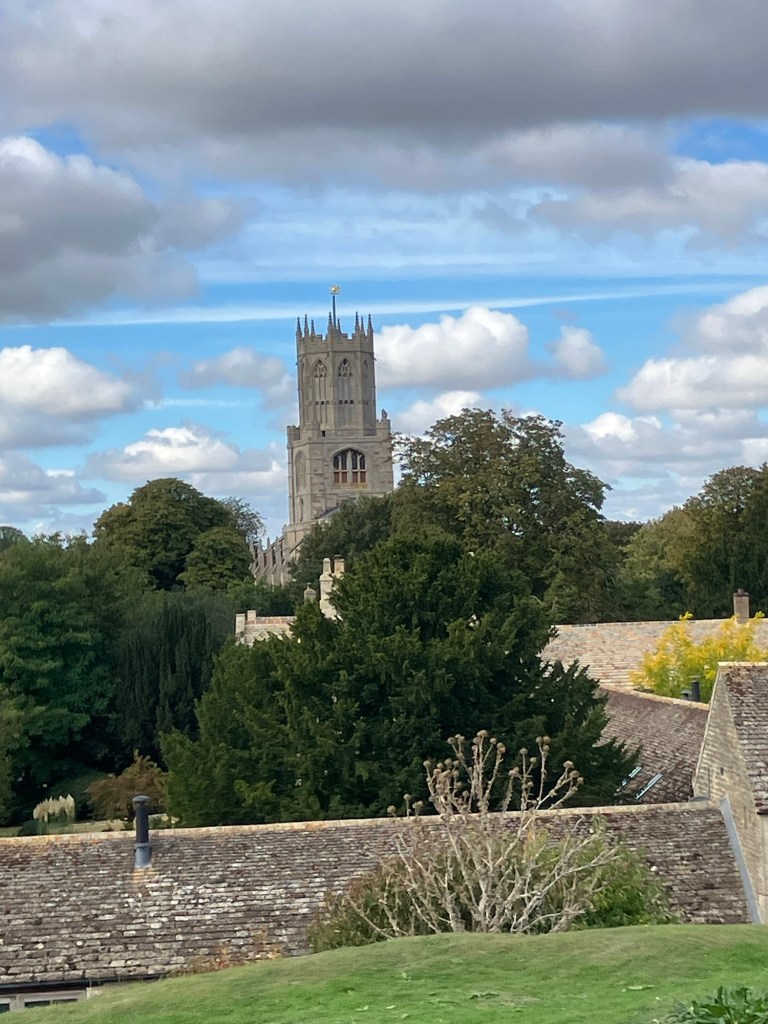
This afternoon I visited Fotheringhay, where the church tower rises above the trees and stone houses, and the River Nene runs beside the remains of a castle. It is a small Northamptonshire village with an extraordinary place in our history. Richard III was born here. Mary, Queen of Scots, was executed here. Between those two events lies a much larger story of family, faith and royal power.
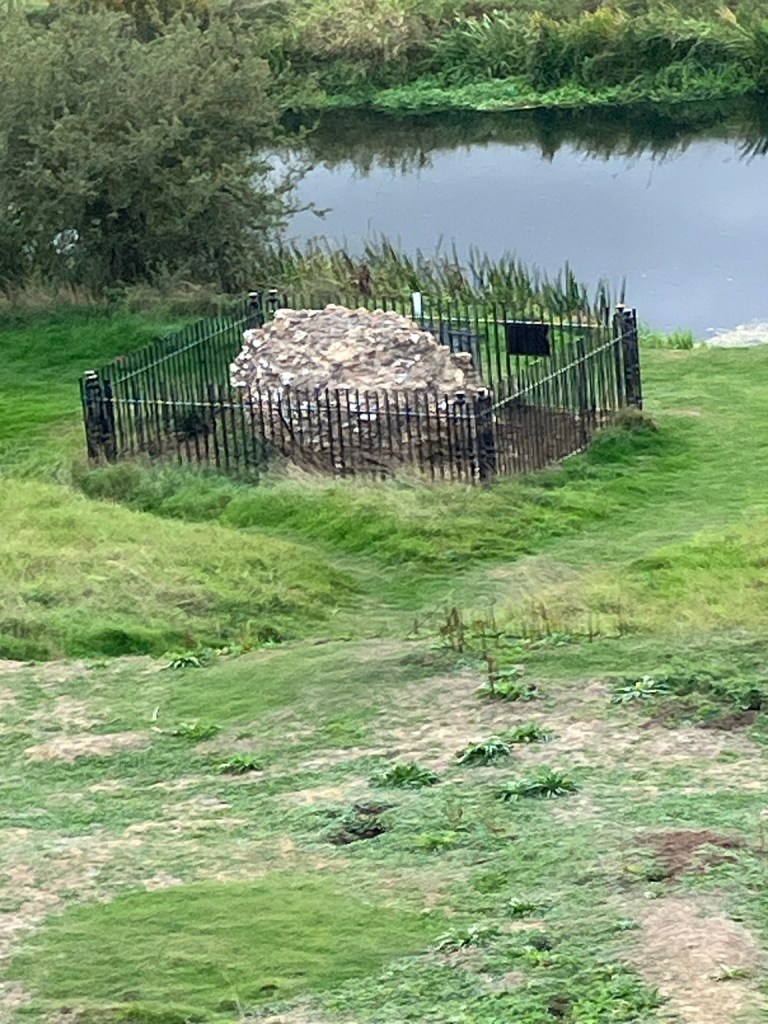
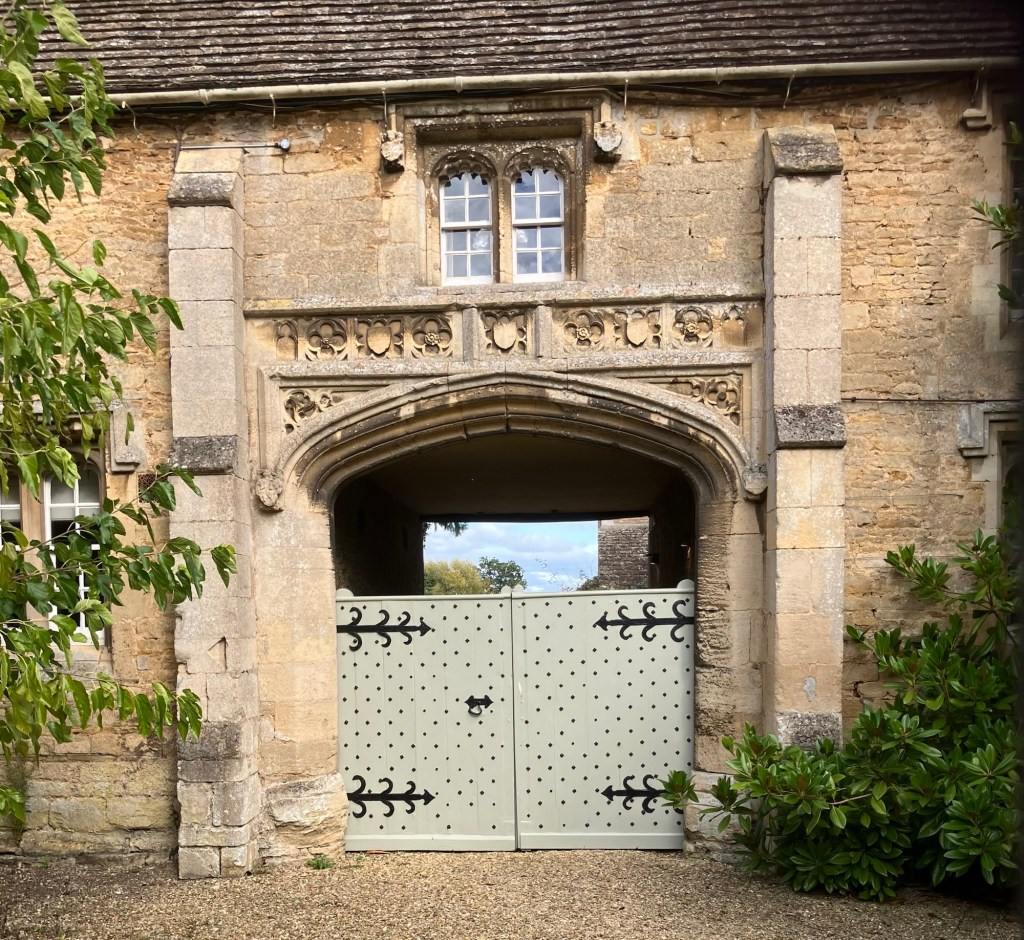
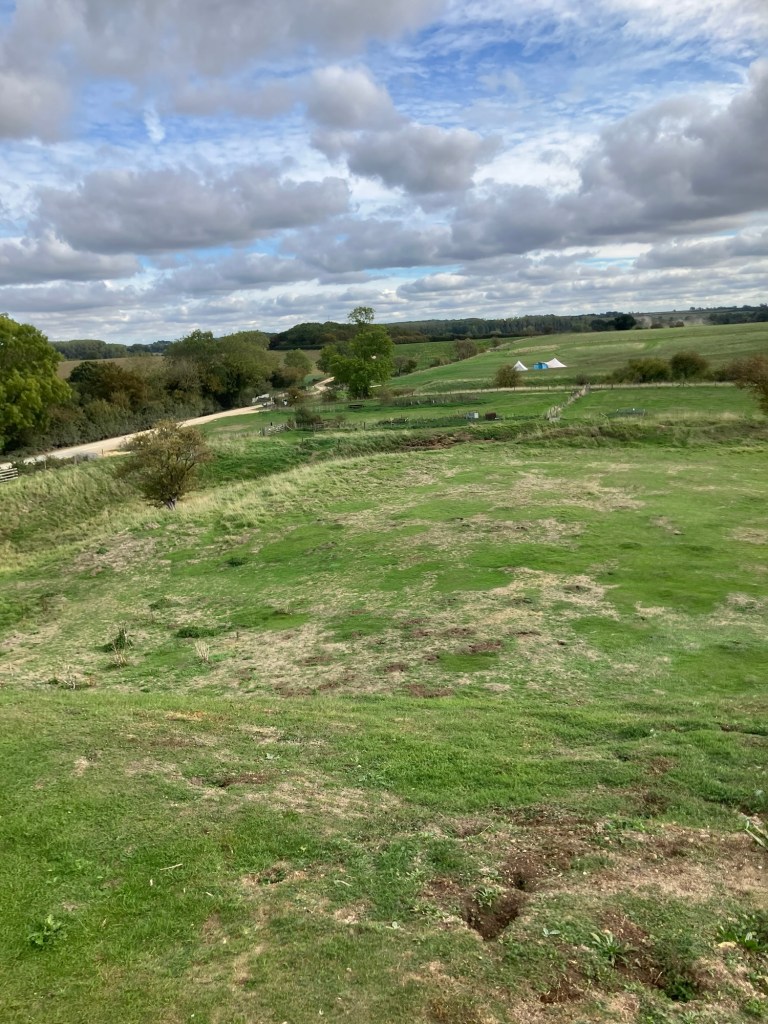
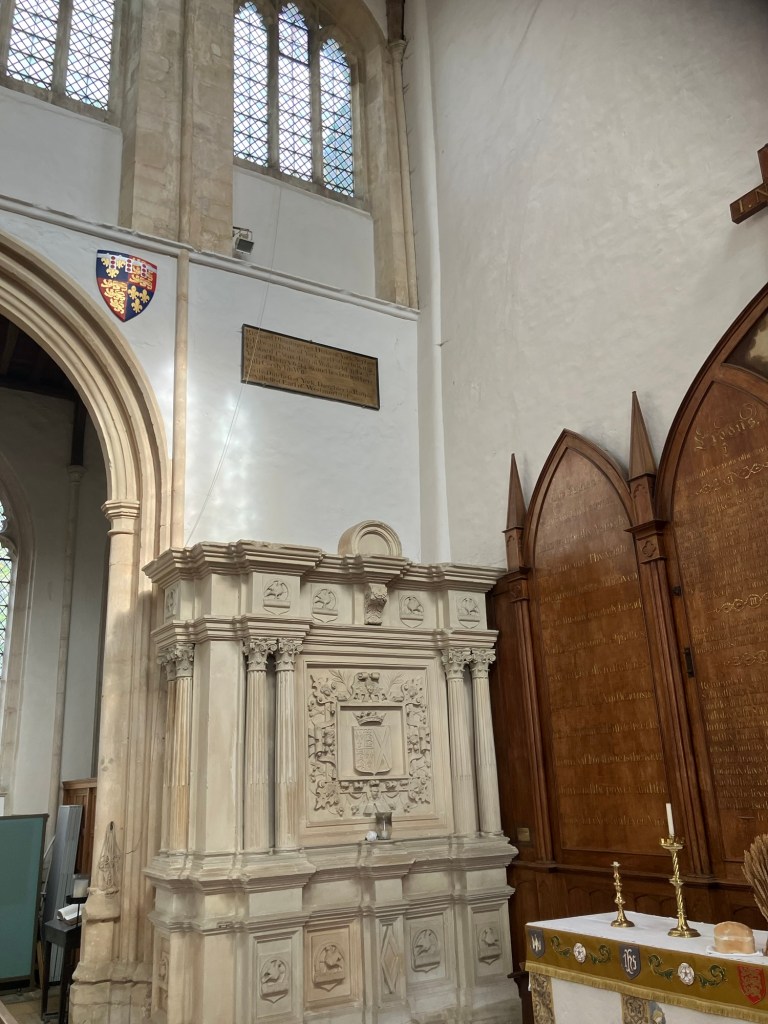
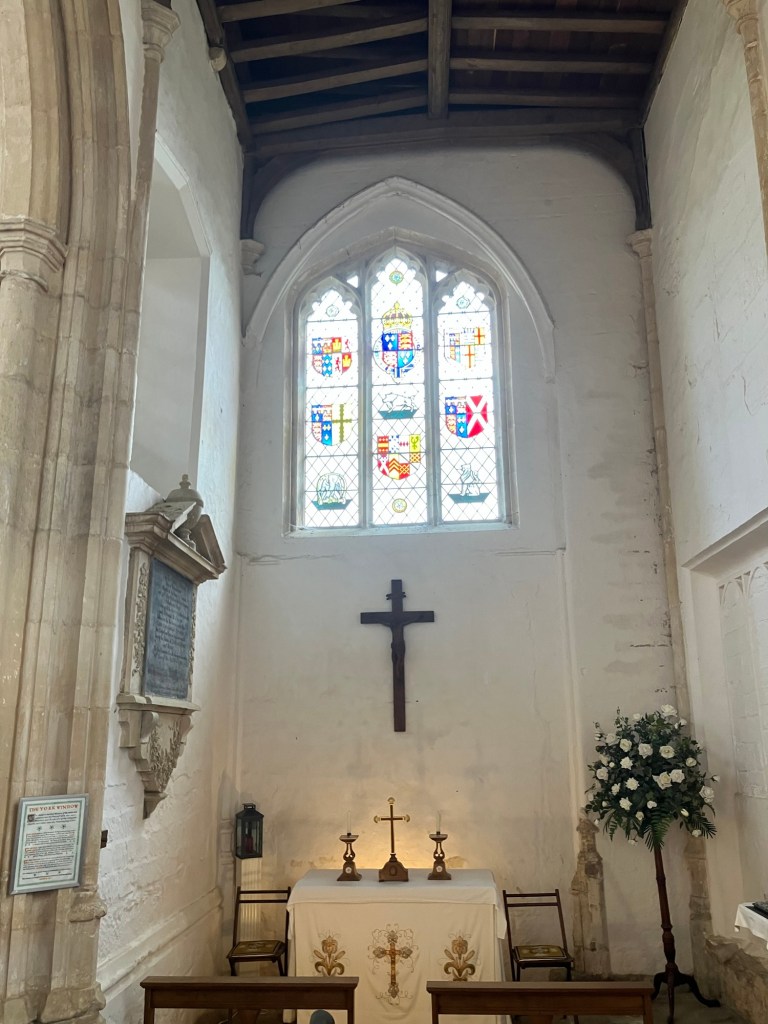
The photographs I took capture something of that mixture. There is the colour of the pulpit and the formality of a Yorkist memorial inside the church. Outside are grass, uneven ground, water and a surviving fragment of castle wall. The buildings have changed or disappeared, but the relationships between the church, village and castle can still be read in the landscape.
For anyone interested in the Wars of the Roses, Fotheringhay deserves time. For me, writing about Joan Beaufort and Eleanor Neville, it also has a particular family connection. Cecily Neville, Duchess of York, was Joan’s daughter and Eleanor’s sister. Her story belongs here as surely as those of the kings and queen who usually lead us to the village.
A castle and a royal household
Fotheringhay’s importance began long before Richard III. A Norman motte-and-bailey castle developed here beside the Nene, and in the later Middle Ages it served as both a royal residence and a place of imprisonment. Edmund of Langley, Edward III’s son and the first Duke of York, enlarged and rebuilt it in the late fourteenth century.
The earthworks give only the outline of what once existed. Medieval records describe a stone tower, chapels, a great hall, chambers, kitchens and gatehouses. This was a substantial household as well as a defended stronghold. The people living around it supplied the food, labour and services that made aristocratic life possible.
The future Richard III was born at Fotheringhay in 1452, the son of Richard, Duke of York, and Cecily Neville. At that point his kingship was far from inevitable. Thinking of the castle as a family residence helps recover something easily lost when we approach his life knowing how it ended.
Edward IV’s provision of the New Inn, built by 1476 to accommodate visitors, is another reminder of the demands a great household placed upon a small village. Fotheringhay’s significance extended beyond the castle gates. Guests, servants, clergy and tradespeople all belonged to its story.
The church built to remember
The Church of St Mary the Virgin and All Saints is the most striking survivor. Its scale reflects Fotheringhay’s importance to the dukes of York. They developed a collegiate foundation here, with priests and choristers whose duties included prayer for the family’s souls. Worship, music and remembrance were woven into the life of the place.
Edward, the second Duke of York, killed at Agincourt in 1415, was buried here. In 1476, Edward IV arranged the magnificent reburial of his father, Richard, Duke of York, and his brother Edmund, Earl of Rutland. Both had died in the catastrophe at Wakefield in December 1460. Richard, then Duke of Gloucester and later Richard III, led the funeral procession to Fotheringhay.
That ceremony expressed family grief, but it also asserted the dignity of a dynasty now occupying the throne. The father who had failed to become king was honoured by the sons whose fortunes his ambitions had helped shape.
The painted fifteenth-century pulpit, given by Edward IV, makes that family presence especially vivid. Its heraldic decoration brings royal identity into the church itself. The colours we see have been restored; nevertheless, this surviving object offers a much fuller impression of medieval display than bare stone alone.
Cecily Neville and the family behind the monuments
Cecily brings Fotheringhay particularly close to my own writing. She and Eleanor Neville were sisters, daughters of Ralph Neville, Earl of Westmorland, and Joan Beaufort. Their marriages placed them in families that would become deeply involved on opposing sides of the Wars of the Roses.
At Northampton, Eleanor lost her son Thomas Percy, Lord Egremont. Later that same year, Cecily lost her husband Richard and their son Edmund at Wakefield. These were separate battles and separate political causes, but for the two sisters they brought losses within the same extended family. Following their lives makes the familiar division into Lancaster and York feel much less tidy.
Cecily lived until 1495 and was buried at Fotheringhay beside her husband. Her long widowhood encompassed the reigns and deaths of both her royal sons. It is difficult to stand before the memorials without thinking about the people whose lives lie behind the titles.
The monuments also record later change. Following the suppression of the college, the eastern part of the church was lost. Elizabeth I provided for the commemoration of her Yorkist ancestors in the surviving church. The memorial photographed here belongs to that Elizabethan history of remembrance; it is not an untouched medieval tomb.
My forthcoming Pen & Sword biographies of Joan Beaufort and Eleanor Neville follow these family connections. Fotheringhay gives them a physical setting, bringing familiar names into the same landscape.
Mary Queen of Scots and the castle that disappeared
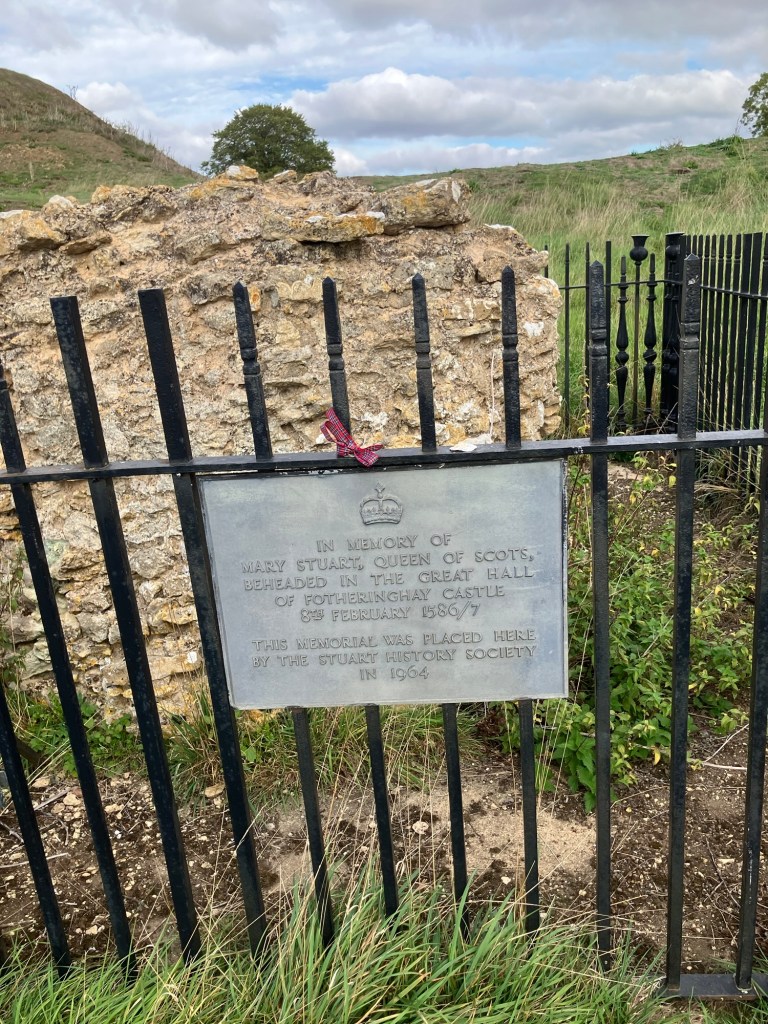
More than a century after Richard’s birth, Fotheringhay became the setting for another royal life’s final chapter. Mary, Queen of Scots, was brought here in 1586 and tried over her alleged involvement in the Babington conspiracy against Elizabeth I. On 8 February 1587, she was beheaded in the castle’s great hall.
This was an event with consequences far beyond Northamptonshire. Mary was an anointed queen, a Catholic claimant to the English throne and the mother of Scotland’s king. Her captivity had made her a focus for plots and for the fears of Elizabeth’s government. Her execution exposed the dangerous question of whether one monarch could lawfully put another to death.
The National Library of Scotland preserves Mary’s last letter, written in the early hours of the morning of her execution. It is a powerful surviving connection with the woman herself. Her body was initially buried at Peterborough Cathedral; in 1612 her son, James VI and I, had her reburied in Westminster Abbey.
Today the great hall is gone. The surviving masonry and the earthworks mark a much larger vanished complex. It is tempting to explain the castle’s destruction as an act of vengeance by Mary’s son, but that familiar story should not be presented as established fact. The documented history is one of seventeenth-century decline and dismantling.
Why Fotheringhay still matters
Fotheringhay remains a living village, and its church continues as a place of worship. Its survival depends on care as well as historical interest. The parish records extensive repairs in 2017–18, including work on the roof, tower, windows and masonry, alongside facilities intended to support its modern use.
The castle site matters in a different way. Its protected earthworks preserve evidence that standing walls alone could never tell us. Keeping the ground and its setting intact allows future research to ask new questions about the buildings and the people who used them.
For visitors, the church and castle belong together. One preserves the splendour and deliberate remembrance of the Yorkist family; the other asks us to look carefully at what has survived beneath the grass. Both reward the effort.
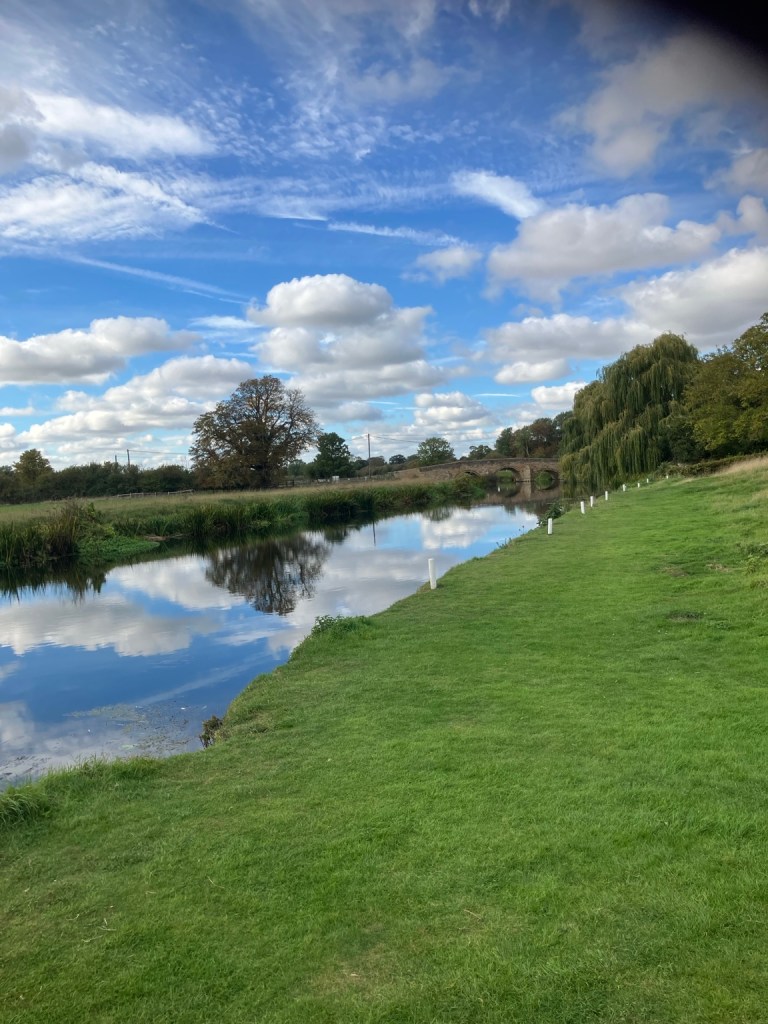
My photographs end with the river. It is part of the setting that connected the castle to the wider world, and part of what makes Fotheringhay such a rewarding place to spend an afternoon. I came away thinking especially of Cecily: a woman so often introduced as the mother of two kings, whose own family history gives this village another reason to be remembered.
Further reading
Historic England — Fotheringhay castle and its protected remains
Richard III Society — Fotheringhay, its church and royal connections
Wakefield Historical Society — the reburial at Fotheringhay
Warmington Benefice — the church and its continuing life


Leave a Reply