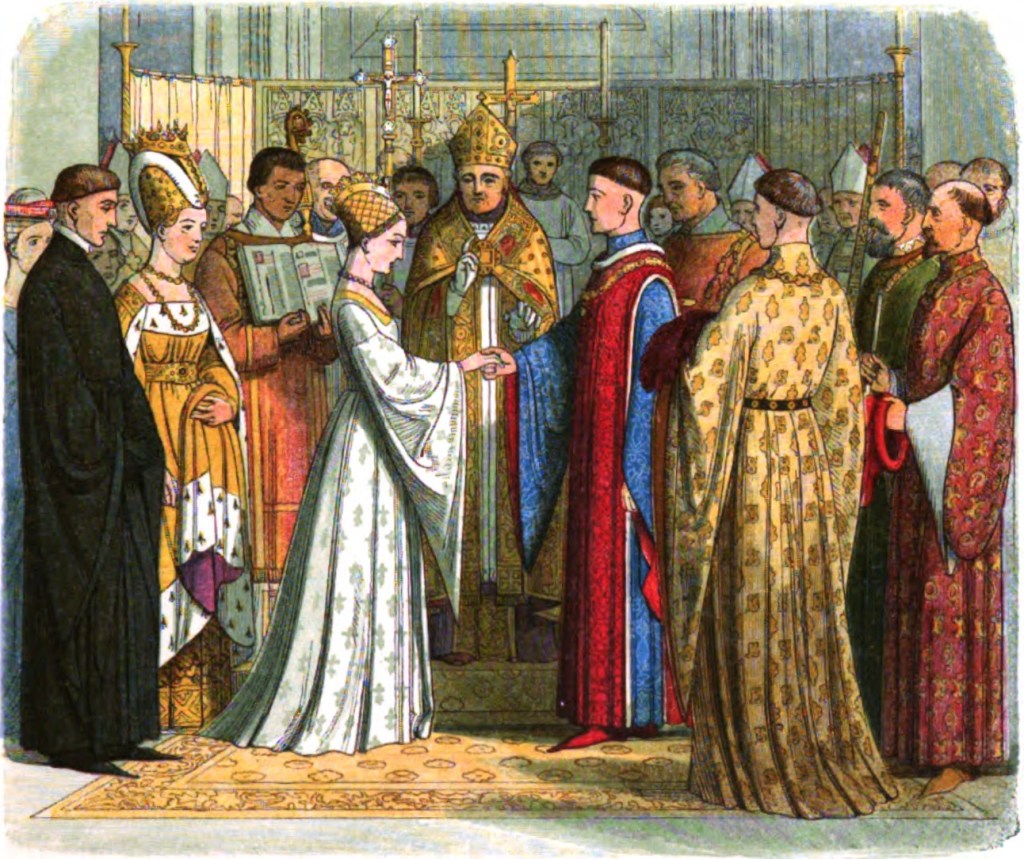
Above: Henry V and Katherine of France, imagined by James William Edmund Doyle in 1864, engraved by Edmund Evans. A nineteenth-century interpretation of their wedding, not a contemporary likeness. Public-domain image and source.
I have some book news to share: I have signed a contract with Pen & Sword History for a biography of Katherine de Valois. The working title is The Rise of the Tudors, Queen Catherine de Valois: Princess of France, Queen of England, Mother of a Dynasty.
It is a subject I am looking forward to getting my teeth into. Katherine stands at the meeting point of some of the most dramatic stories in medieval history: the struggle for France, Henry V’s kingship, the troubled inheritance of Henry VI and the beginnings of the Tudor family. Yet it is surprisingly easy to travel through those stories without spending much time with Katherine herself.
That is what draws me to this book. I want to give her the space that a life of her own deserves.
A princess between two kingdoms
Born in 1401, Katherine was a daughter of Charles VI of France and Isabeau of Bavaria. Her childhood belonged to a royal world shaken by political rivalry, her father’s recurring illness and conflict. Understanding that French world matters. So does looking carefully at Isabeau, whose reputation has so often been shaped by hostile accounts.
Katherine married Henry V at Troyes on 2 June 1420. Their marriage formed part of a settlement intended to reshape the succession to the French crown. The hopes invested in it reached far beyond the wedding ceremony: this young French princess was becoming queen of England while the futures of both kingdoms were being contested.
The political purpose of the marriage is clear. The private relationship is harder to recover. I want to approach it without assuming that an arranged royal marriage must have been loveless, or borrowing certainty from later romantic retellings. The surviving evidence deserves a close and fair reading.
A young widow and the mother of a king
Her son, the future Henry VI, was born in December 1421. Henry V died the following August. Katherine was still only twenty, and her baby was king of England.
Those dates can pass very quickly in a general history. In a biography, there is room to pause over what they meant. How did a young queen’s position change when she became a widow? What choices were available to her? How did motherhood, royal status and the interests of those governing for an infant king fit together?
These are questions about power, but they are also questions about a human life. They are part of why medieval biography matters to me. A succession chart can show who inherited. It takes a fuller account to explore the circumstances in which people had to live.
Why the Tudor story begins before Bosworth
Katherine’s later relationship with the Welshman Owen Tudor brought another extraordinary family connection. Their sons included Edmund and Jasper Tudor, half-brothers of Henry VI. Edmund became the father of Henry VII. Katherine was therefore both the mother of a Lancastrian king and the grandmother of the first Tudor king.
She died in 1437, long before her grandson took the throne. The Tudor future was something she never lived to see. Reading that outcome backwards into her decisions risks making her life look more predictable than it was.
The story of Katherine and Owen has attracted romance and legend for centuries. It deserves careful attention, with the uncertainties about their courtship and marriage made clear. There is plenty of interest in the evidence itself without filling its gaps with invented conversations or motives.
Why Katherine deserves this book
For me, the appeal lies in bringing these parts of her life together: French princess, English queen, young widow, mother and a woman making her way within the constraints of royal society. Each role helps us understand the others.
Even the story of her remains raises uncomfortable questions about remembrance. Westminster Abbey records the repeated movement of her coffin and the long period during which her body lay above ground. Her treatment after death belongs to the story of how later generations saw her, too.
There is much to explore, and signing the contract is an exciting step. I will share discoveries, places and questions from the research here as the book develops. A publication date will follow when it is confirmed.
If you enjoy medieval lives, royal history and the people behind the dynasties, I hope you will follow along. Katherine is going to keep me busy, and I look forward to introducing you to her world.
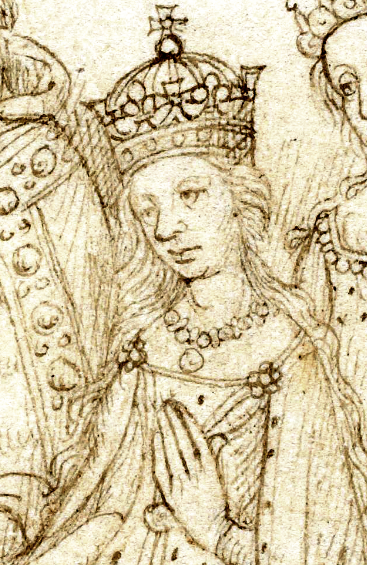
Further reading: Westminster Abbey: Henry V and Catherine de Valois; Westminster Abbey: Henry VI. Both illustrations used here are public domain; their source and rights records are linked in the captions.


Leave a Reply